
- Education
- Wedding Bands & Eternity
- How Much Gap Should There Be Between an Engagement Ring and Wedding Band?
Wedding Bands & Eternity
How Much Gap Should There Be Between an Engagement Ring and Wedding Band?
A gap between engagement ring and wedding band is one of the most common surprises after the wedding. Whether a gap is acceptable, and how to close it, depends on your setting, your stone's shape and the band you pair with it.
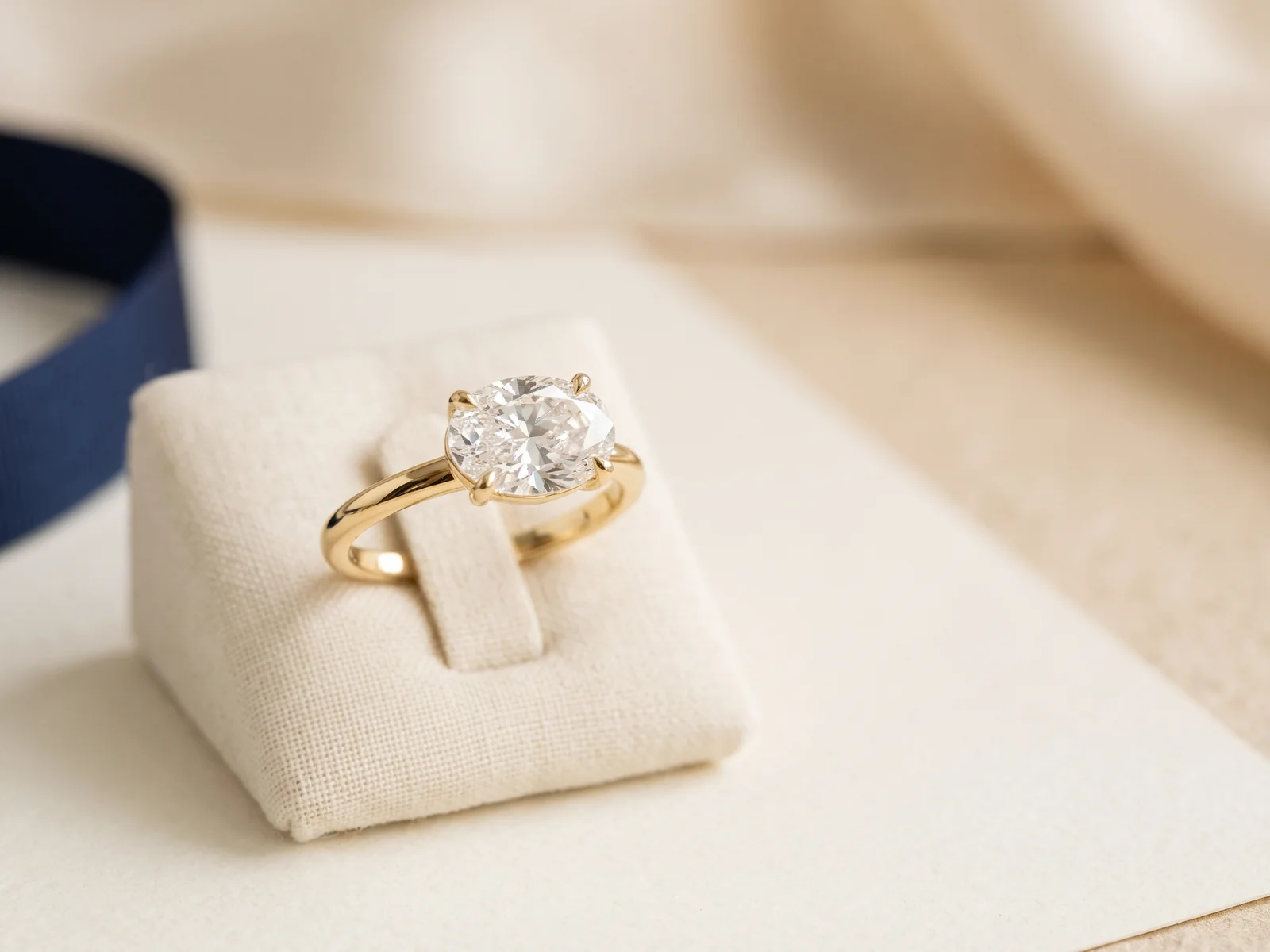
 Reviewed by Raj Sood, Graduate Gemologist (GIA), AJP (GIA)Founder and Graduate Gemologist (GIA) · reviewed 17 November 2026
Quick answer
Most people want no visible gap between engagement ring and wedding band, so the two sit flush. A gap of about 1 mm or less usually goes unnoticed; 2–3 mm or more tends to look unplanned. Low settings, halos and wide or pointed stones cause gaps; curved, notched or fitted bands, or a higher setting, close them.
Is a gap between engagement ring and wedding band normal?
Yes, it is common, and it is not a fault in either ring. Many engagement rings are designed on their own, months or years before anyone thinks about the wedding band. When the band arrives, it meets the engagement ring at its lowest, widest point, and if that point is the stone, the claws or a halo, the band simply cannot slide in close. The result is a strip of skin showing between the two rings.
There are really two kinds of gap. The first is the side-by-side gap: look down at your hand and you see space between the two shanks (the shank is the band part of a ring that goes around the finger). The second is the under-stone gap: look at the rings from the side and you see daylight between the band and the underside of the setting. Most people only mind the first kind, because that is the view everyone else sees. If you are still working out the terms, our explainer on the difference between a wedding ring and a wedding band and our glossary of jewellery terms are useful starting points.
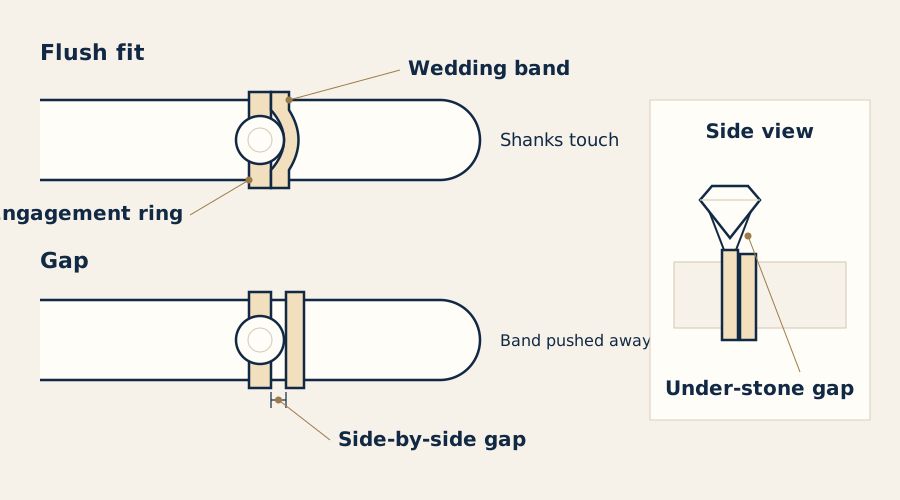
A flush fit means the two shanks touch along their full length, so the pair reads as one piece of jewellery. Some people deliberately choose a small, even gap as a style, and that is perfectly valid. The problem is only ever a gap you did not plan for, especially one that is uneven or that lets the rings twist apart during the day.
Why is there a gap between my rings?
A gap almost always comes from something on the engagement ring sitting lower or wider than its own shank. These are the usual causes:
- Low-set stone: the stone sits close to the finger, so its girdle (the outer edge) or the base of the setting is at the same height as the band and blocks it.
- Wide stone overhang: a stone wider than the shank hangs out over the finger on each side. An oval set north–south, for example, extends along the finger towards where the band wants to sit.
- Halo: a ring of small diamonds around the centre stone adds roughly 1–1.5 mm on each side and usually sits low.
- Bezel setting: a metal rim around the whole stone is secure, but it is solid all the way down, so nothing can slip underneath it.
- Pointed shapes: pears, marquises and hearts have points and V-claws that stick out further than the rest of the outline.
- Side stones and three-stone designs: extra stones widen the head of the ring, and the shoulders often flare out.
- Gallery rails and baskets: the metal framework under the stone can be lower or wider than the shank.
- Band profile: two strongly domed or knife-edge bands only touch along a thin line, so light shows above and below the contact point.
The last one is easy to overlook. A flat-sided profile meets the engagement ring along its whole side wall, while a court (comfort-fit) or D-shape profile curves away. Our guide to how court, D-shape and flat profiles differ shows the cross-sections side by side. Size mismatch also matters: if the band is half a size (one Australian letter half-step) looser than the engagement ring, it will drift and rotate, and a gap opens up during the day even when the rings start flush.
How much gap is acceptable between rings?
There is no official standard, but in practice the eye picks up a gap quite quickly once it passes about a millimetre. This is how different gaps tend to read on the hand:
| Gap (side by side) | How it looks | What people usually do |
|---|---|---|
| 0 mm (flush) | The two rings read as one set | Nothing; this is the most common goal |
| Under 1 mm | Barely visible except up close | Usually left as is |
| 1–2 mm | Noticeable when you look down at your hand | Try a different band profile or a slightly curved band |
| 2–3 mm | Clearly visible; can look like the band does not belong | Curved, notched or fitted band |
| Over 3 mm | Two separate rings with skin between | Fitted band, or rethink the setting height |
| Even deliberate gap | A planned, spaced look | A spacer ring or matching gap by design |
Two things matter as much as the width of the gap. One is evenness: a gap that is wider at the stone than at the back of the ring looks accidental, while a uniform gap looks chosen. The other is movement: a band that slides about and clicks against the engagement ring can wear both rings over the years. Diamond is 10 on the Mohs hardness scale and gold and platinum are far softer, so a diamond-set band rubbing against a claw or shank can slowly wear metal away.
Band width plays a part too. A wider band makes a gap look proportionally smaller, but it also makes the whole stack heavier and can crowd a delicate solitaire. Many women's bands sit around 1.8–3 mm wide to match a typical engagement ring shank, and our guide to diamond size in a wedding band explains how the stones set into a band affect its width and height.
Which engagement ring shapes leave a gap with a straight band?
Many guides treat every engagement ring the same. In reality the stone's shape decides most of the fit. Here is how the main shapes usually behave with a plain straight band, assuming a claw setting of normal height:
| Shape | Typical gap risk | Why | Usual fix |
|---|---|---|---|
| Round solitaire | Low | Compact outline; most settings let a band slide under | Straight band usually sits flush |
| Princess | Low to medium | Corner claws can protrude past the shank | Straight band if the head sits high; otherwise a slight notch |
| Cushion | Medium | Often paired with a halo that sits low | Curved or notched band |
| Oval (north–south) | Medium to high | Length runs along the finger, so the stone overhangs | Gently curved or fitted band |
| Emerald and radiant | Medium to high | Long step-cut outline, often set low | Straight band only if raised; otherwise fitted |
| Asscher | Medium | Square but wide, with corner claws | Slight notch or higher setting |
| Pear | High | One point sticks out on one side | Asymmetric curved band or V-band |
| Marquise | High | Two long points along the finger | V-shaped or fitted band |
| Heart | High | Wide lobes and a protruding point | Contoured band shaped to the outline |
| Three-stone | High | Side stones widen the head | Curved band or fitted band |
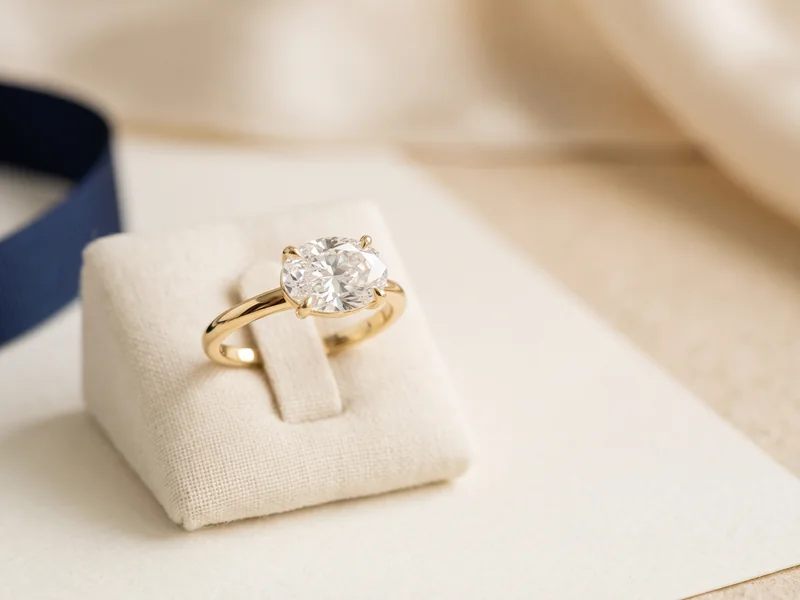
Orientation changes the picture. An oval, pear or marquise set east–west (lying across the finger) presents its narrower side to the band, so the overhang is smaller and a straight band has a better chance. Set north–south (pointing along the finger), the same stone pushes the band away further.
For square shapes, our guide to bands that suit a princess cut engagement ring covers the corner-claw problem in detail. For every other shape, the principles in matching a band to your engagement ring's shape and style apply: follow the outline of the stone, match the metal colour and keep the band's width in proportion to the shank.
Not sure which one is right?
Send us the stones you are looking at and our gemologist will tell you which to choose and why.
Which settings let an engagement ring and wedding band sit flush?
The setting matters more than the stone. A setting is described as flush-fit or wedding-band friendly when there is enough clearance under the head for a straight band to pass beneath it. In general:
- Raised claw solitaires: the stone sits high enough that a straight band tucks underneath. Usually the easiest to pair.
- Cathedral settings: the shoulders arch up to hold the stone, creating space under the head. A straight band generally sits flush, though very high cathedrals can look tall in a stack.
- Low-set solitaires: practical and less likely to catch on clothing, but the girdle or basket often blocks a straight band.
- Halo settings: the halo usually forms the widest, lowest point of the ring. Expect to need a curved or fitted band unless the halo was raised on purpose.
- Bezel and half-bezel: a solid rim reaches down to the shank. A notched or fitted band is the usual answer.
- Hidden-halo and gallery designs: decorative details under the stone can sit either clear of the band or in its way; check from the side.
It also helps to decide early between a plain band and a diamond one, because diamond-set bands are usually taller and wider than plain bands of the same look. Our comparison of plain and diamond-set wedding bands covers how each sits against different settings.
How do you close the gap between engagement ring and wedding band?
You have five realistic options. Which one suits you depends on how big the gap is, whether you want the rings to work on their own, and whether the engagement ring can be altered.
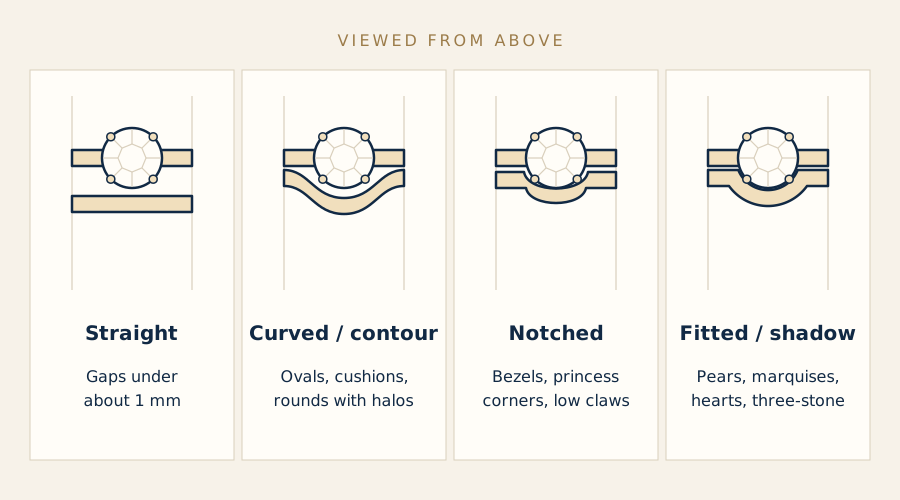
| Fix | How it works | Best for | Trade-offs |
|---|---|---|---|
| Straight band, different profile | A flat-sided or thinner band gets closer to the setting | Gaps under about 1 mm | Will not help if the stone or halo blocks the band |
| Curved (contour) band | An even curve dips around the stone | Ovals, rounds with halos, cushions | Off-the-shelf curves may not match your exact outline |
| Notched band | A small cut-out or dip only where the setting sits | Bezels, princess corners, low claws | The notch shows when the band is worn alone |
| Fitted (shadow) band | Made to follow the exact outline of your engagement ring | Pears, marquises, hearts, three-stone | Made for one ring; looks unusual worn on its own |
| Raise the setting | A jeweller rebuilds the head so a straight band fits underneath | People who want a straight band | Changes the look and height of the engagement ring |
A contour band is a band with a gentle curve or wave along its top. A notched band keeps a straight line but has a small scoop where the setting sits. A fitted band, sometimes called a shadow band, is made to mirror the outline of one specific engagement ring, so the two lock together. Our guide to how custom fitted bands are shaped and made goes through the process, including the CAD models used to match an exact curve.
Related guideFitted Wedding Bands Explained | Custom Curved BandsSome couples go one step further and have the two rings soldered (permanently joined) together. That stops all movement and wear between them, but it means you cannot wear either ring on its own, and resizing becomes a job for both rings at once. If you are not ready to commit to that, a thin ring worn between the two is another option; see our guide on whether a spacer band helps your stack.
Is a gap between rings ever a good idea?
Sometimes, yes. A planned, even gap suits people who like a modern, spaced-out stack, or who want to show off the side profile of a detailed setting. It can also be practical:
- Less wear: rings that do not touch do not rub, which protects claws and soft metal shanks over decades of daily wear.
- Mixed metals: a yellow gold band beside a platinum engagement ring can look more intentional with a little space.
- Wearing rings separately: if you plan to wear the band alone at work or the gym, a straight band that leaves a small gap may suit you better than a fitted band that looks odd by itself.
- Stacking later: a gap can be filled with an eternity or anniversary ring down the track.
The key is that the gap is even and the rings stay put. Ring guards, sizing beads inside the shank or a well-chosen thin spacer ring that holds the stack steady can keep the spacing consistent. A flat-sided band profile also helps the rings sit parallel rather than tilting into each other.
Should you plan the wedding band when choosing the engagement ring?
If you can, yes. Asking the question at the engagement ring stage costs nothing and can save a custom band later. Think about three things: how high the setting will sit, how wide the head of the ring is compared with the shank, and whether you want the wedding band to be straight, curved or fitted. Our complete wedding ring buying guide sets out every decision in order.
Consider future changes too. Fingers change size over the years, and a fitted band has to be resized together with the engagement ring to keep the fit. Designing with future resizing in mind from the start means leaving enough metal in the shank and avoiding designs that make resizing awkward. Plain metal at the back of both rings is the simplest to work with.
If the wedding is for two, the partner's band is a separate question, usually about width, profile and comfort rather than gaps; the men's wedding band guide covers widths, profiles and metals. And if you already have the engagement ring, our advice on choosing a band that complements an existing ring walks through metal, width and style together.
Create your ring or wedding band
How to check whether a wedding band will sit flush: step by step
- Look from above. Put the engagement ring on and note where the widest part sits: the stone, claws, halo or shoulders.
- Look from the side. Check the clearance under the stone. If there is clear space above the shank, a straight band may fit underneath.
- Try a straight band first. Slide a plain band of your intended width against the engagement ring and measure any gap in millimetres.
- Check the profile. If the gap is under about 1 mm, a flatter-sided band profile with straight side walls may close it.
- Match the fix to the shape. Ovals and halos suit a gentle curve; bezels and princess corners suit a notch; pears, marquises and hearts usually need a fitted band.
- Confirm sizes match. Both rings should be the same size so they stay aligned instead of rotating apart.
- Decide on wearing alone. If you want to wear the band by itself, favour a straight or lightly curved band over a fully fitted one.
- Think long term. Ask how the pair will be resized, and whether soldering them together suits the way you live.
Ready to have a band made? GemTrove makes custom made wedding bands in Melbourne, measured from your engagement ring and designed in 3D before anything is made. See how a band is made to fit your ring, or read about a custom eternity ring. Related pages: jewellery repairs in Melbourne, ring repair in Melbourne, ring resizing in Melbourne, claw retipping in Melbourne, custom jewellery, custom earrings and custom-made necklaces. Raj Sood, Graduate Gemologist (GIA), sees clients by appointment at Unit 903/125 Swanston St, Melbourne VIC 3000.
Free consultation
Talk to a gemologist
Compare stones in person or online with Raj Sood, Graduate Gemologist (GIA), AJP (GIA).
Book a consultationShop this shape
FAQ
Common questions
Should an engagement ring and wedding band touch?
Most people prefer them to touch so they sit flush and read as a set. It is a personal choice, though, and an even, deliberate gap is also a valid style.
Is it bad if there is a gap between my rings?
No, a gap does not harm either ring. The only practical concern is a loose band that slides and rubs against the engagement ring, which can wear metal or claws over time.
Can a jeweller fix the gap between my engagement ring and wedding band?
Yes. Common fixes are a curved, notched or custom fitted band, or rebuilding the engagement ring's setting higher so a straight band fits underneath.
Do I need a curved wedding band for an oval engagement ring?
Not always. If the oval sits high or is set east–west, a straight band may sit flush; low-set north–south ovals and oval halos usually need a gentle curve.
Why does my wedding band keep moving away from my engagement ring?
Usually the two rings are different sizes, or the band's profile lets it slide. Matching the sizes or adding sizing beads keeps the rings together.
Should I solder my engagement ring and wedding band together?
Soldering stops movement and wear between the rings, but you can no longer wear either one alone, and both must be resized together. Many people wait a while before deciding.
Ask a gemologist
Not sure which diamond to choose?
Raj Sood is a Graduate Gemologist (GIA) who works alongside our master jewellers. Bring the stones you are considering, or send the reports, and he will tell you honestly which one is better and why.
Keep learning
Related guides
 Wedding Bands & EternityHow to Match a Wedding Band to an Engagement Ring
 Wedding Bands & EternityFitted Wedding Bands Explained | Custom Curved Bands
 Wedding Bands & EternityDo You Need a Spacer Band Between Rings?
 Wedding Bands & EternityWedding Band Profiles ExplainedWedding Bands & EternityWedding Ring Buying Guide
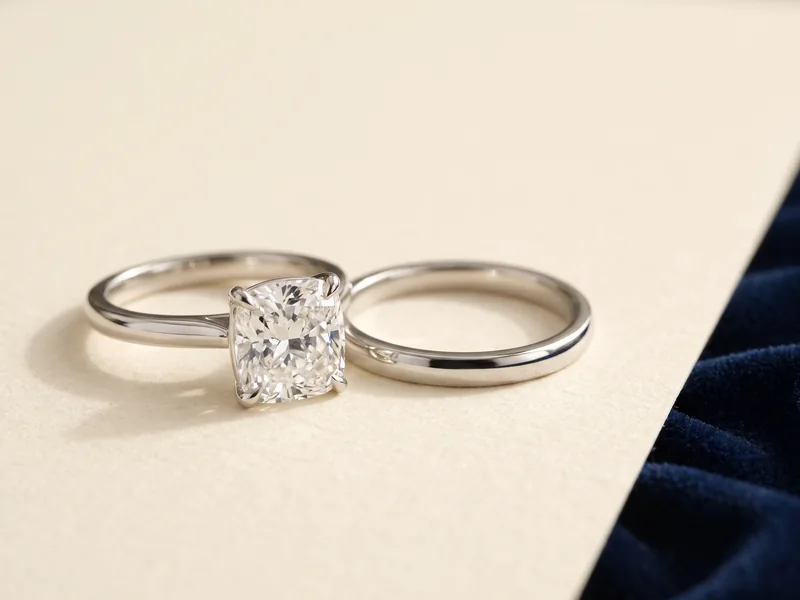 Wedding Bands & EternityWedding Ring vs Wedding Band
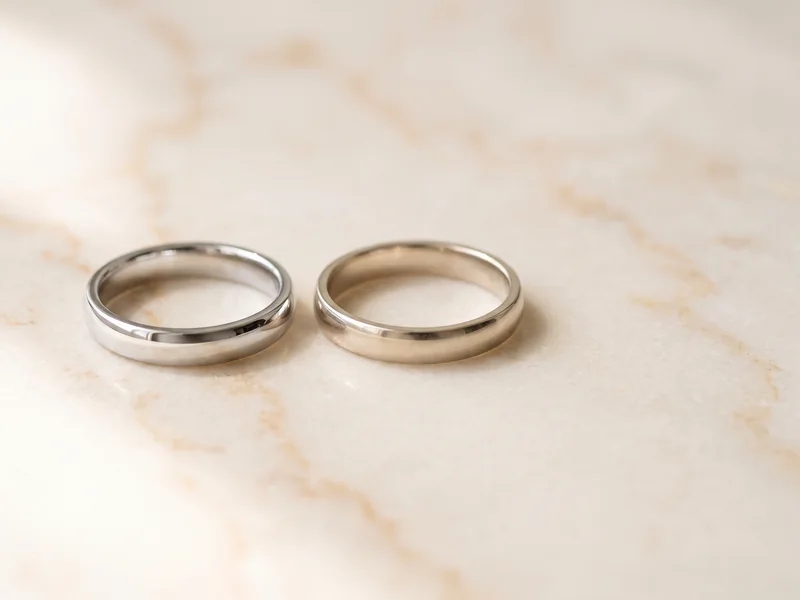 Wedding Bands & EternityMen’s Wedding Band Guide
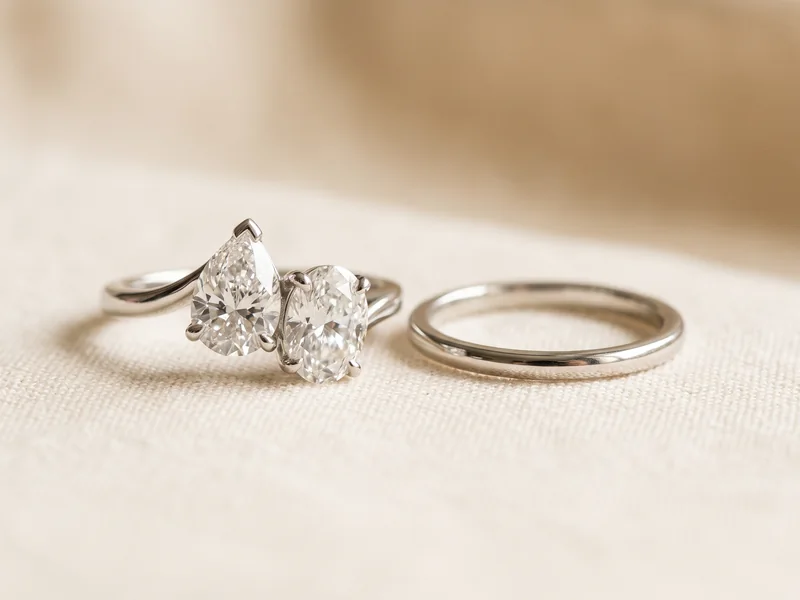 Wedding Bands & EternityHow Big Should Diamonds Be in a Wedding Band?
Explore more
More guides on this topic
Education