
- Education
- Diamond Shapes
- Pear Diamond Point Protection: Settings, Checks and Everyday Care
Diamond shapes
Pear Diamond Point Protection: Settings, Checks and Everyday Care
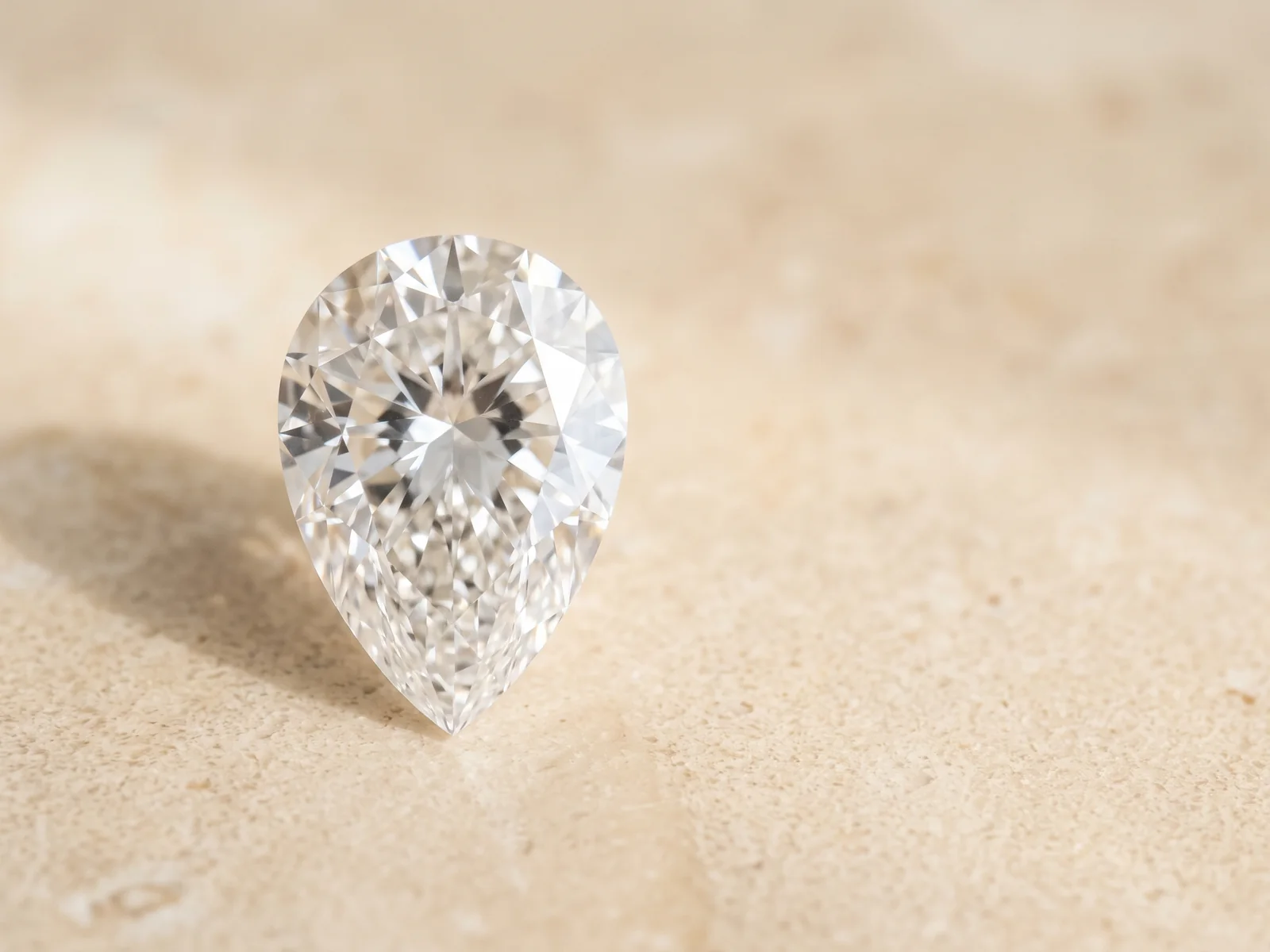
The pear diamond point is the thinnest, most exposed edge on the stone, and it is where most pear chips happen. Here is how to choose a stone, a setting and habits that keep that point intact for decades.
 Reviewed by Raj Sood, Graduate Gemologist (GIA), AJP (GIA)Founder and Graduate Gemologist (GIA) · reviewed 16 November 2026
Quick answer
The point of a pear diamond is its thinnest, most exposed edge, so it chips more easily than the rounded end. Protect it with a V-claw (a V-shaped claw that wraps the tip), a bezel or a halo, avoid inclusions near the point, and have the claws checked every six to twelve months.
Why is the point of a pear diamond the weak spot?
A pear diamond is a modified brilliant cut shaped like a teardrop: one rounded end and one tapered point (also called the tip). It combines the rounded half of an oval with one half of a marquise. If you are still deciding on the shape itself, start with our full pear cut diamond guide, which covers colour, clarity and proportions in depth.
The rounded end of a pear spreads any knock across a broad curve. The point does the opposite. Its facets meet at a narrow angle, the girdle (the thin outer edge where the top and bottom of the stone meet) is usually at its thinnest there, and it sticks out furthest from the setting. A small, sharp blow that the rounded end would shrug off can take a flake out of the point.
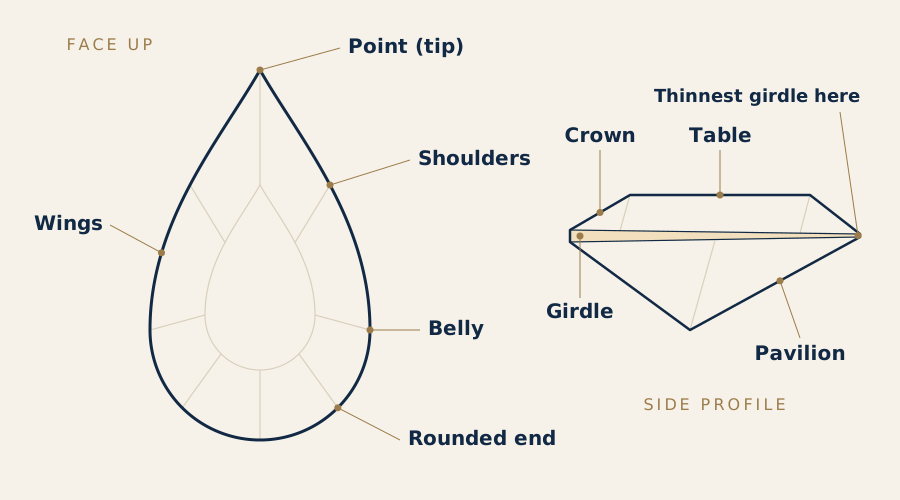
Most pear chips we see share the same story: an unprotected or worn claw at the tip, plus a knock against something hard such as a stone benchtop, a car door or gym equipment. Both halves of that story can be managed. If any term on this page is new to you, our plain-English jewellery terms explain them.
Can a diamond chip if it is the hardest material?
Yes. Diamond is 10 on the Mohs scale, the hardest natural material, which means almost nothing will scratch it. But hardness (resistance to scratching) is not the same as toughness (resistance to breaking or chipping). Diamond has cleavage: it can split cleanly along its crystal planes, which run in four directions. A sharp knock at the wrong angle on a thin edge can start a break along one of those planes.
That is why shape matters so much for durability. Shapes with no points, such as rounds, ovals and cushions, have no thin tips to lose. Shapes with one or more points, such as pears, marquises, hearts and princess cuts, need more thought. Our overview of how each diamond shape handles wear puts them side by side.
Girdle thickness is the most useful detail on a grading report for judging how robust a point is. GIA and IGI describe it on a scale, usually as a range (for example, "thin to slightly thick"), because the girdle varies around a fancy shape.
| Girdle grade | What it means at the point | Risk to the point |
|---|---|---|
| Extremely thin | Almost a knife edge | High: chips easily, even during setting |
| Very thin | Fine edge, little support | Raised: needs a full V-claw or bezel |
| Thin | Common on well-cut pears | Moderate: fine with a protective setting |
| Medium to slightly thick | Sturdy edge | Lower: the usual target range |
| Thick to very thick | Robust, but hides weight | Low risk, though the stone may face up smaller |
| Extremely thick | Heavy, wasted weight | Low risk, but poor value and duller look |
What should you check in the stone to protect a pear diamond point?
Protection starts before the stone is set. Three things on the report, and one thing you can see in a video, tell you how vulnerable a particular pear's point will be.
- Girdle thickness: aim for a range that does not start at extremely thin or very thin. Thin to slightly thick is a common, sensible range for a pear.
- Inclusions near the tip: check the plotting diagram (the map of inclusions on the report). A feather, which is a small internal crack, within about a millimetre of the point is the one inclusion I would avoid, because it can grow if the tip takes a knock.
- Naturals and indented naturals: small pieces of the original crystal surface left on the girdle. Harmless in most places, but at the point they mark an edge that may already be uneven.
- Ratio: very slim pears, above about 1.75, have a sharper, narrower tip than pears around 1.50–1.70.
The ratio point is often overlooked. A slim pear looks elegant and elongated, but its point is finer and more exposed. Our page on pear length-to-width ratios explained shows how the outline changes from about 1.40 to 1.80, so you can balance looks with robustness.
If you love a teardrop look but are worried about the tip, it is fair to ask whether an oval would suit you better. An oval has a similar elongated shape with no point at all, and our guide to oval diamond proportions and colour covers what to look for.
Which setting protects a pear diamond point best?
The setting does most of the protecting. Every good pear setting puts metal over, or close around, the tip. The main options, from most open to most enclosed:
| Setting | How it protects the point | Look | Protection |
|---|---|---|---|
| Single round claw at the tip | A claw sits just over the point | Very open, most light | Fair: the point edge is partly exposed |
| V-claw (chevron claw) | A V-shaped claw wraps both sides of the tip | Classic, barely noticeable | Good: the standard choice |
| Double claws at the tip | Two claws sit either side of the point | Open, symmetrical | Fair to good: the very tip can be exposed |
| Halo | Small diamonds surround the pear, with a V-claw usually at the tip | Larger look, framed outline | Good: the halo shields the edge |
| Half-bezel | Metal rims the sides, often including the point | Modern, clean | Very good |
| Full bezel | A continuous metal rim around the whole stone | Sleek, slightly smaller face-up | Excellent |
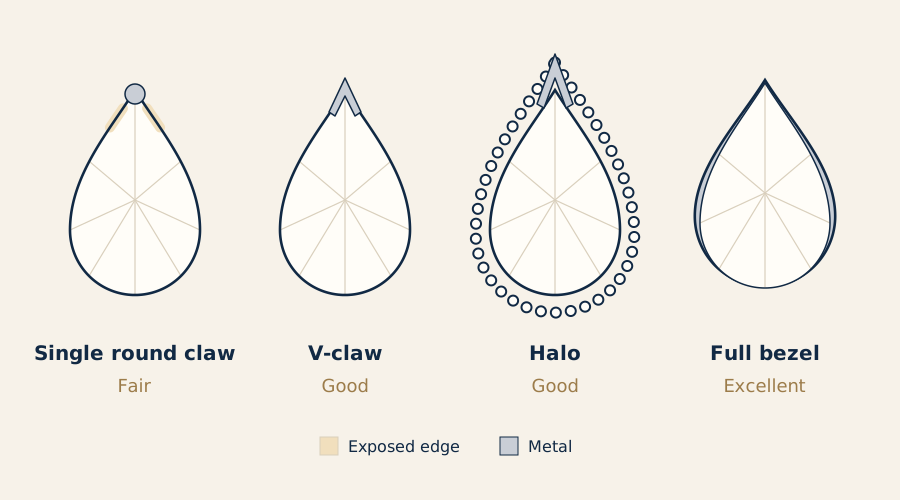
For most pear engagement rings, a five-claw setting with a V-claw at the tip is the usual answer: two claws on the rounded end, two on the shoulders of the pear and the V-claw on the point. It keeps the outline visible while covering the most fragile edge. A bezel is the strongest choice for people who work with their hands, such as nurses, tradies, chefs and gardeners.
Metal matters too. Platinum claws tend to bend and move rather than wear away, so they hold their shape around a point for a long time. Gold claws, whether 9 or 18 carat, wear down gradually and need re-tipping over time, so they are often made slightly heavier at the tip. You can see examples of each style in setting styles for pear diamonds, compared.
Related guideBest Settings for Pear DiamondsNot sure which one is right?
Send us the stones you are looking at and our gemologist will tell you which to choose and why.
Should the pear diamond point face up or down on the finger?
Traditionally, a pear engagement ring is worn with the point towards the fingertip. It lengthens the look of the finger, and it is how most designs are drawn. It is also the direction that meets door handles, bag zips and benchtops first when you reach for something.
- Point towards the fingertip: the classic look; relies most on a solid V-claw or bezel.
- Point towards the wrist: a little more sheltered when you reach forward, and some people prefer how it looks when they glance down at their hand.
- East-west (sideways): the point faces the neighbouring finger. It is less exposed to frontal knocks but can rub against the next ring or finger.
The ring around the pear matters as much as its direction. In a three-stone ring, the side stones have edges of their own; if you are deciding between trilliant or pear side stones, remember that both have points that also need claws or a bezel.
A wedding band pressed hard against the tip is another common cause of damage, especially diamond against diamond. A contoured band, a small gap, or a setting that sits high enough to clear the band all help. Our page on wedding bands and settings that sit safely beside a pear shows the common combinations.
What everyday habits put a pear diamond point at risk?
Most chips happen during ordinary days, not dramatic accidents. These are the situations we hear about most:
- Gym and sport: gripping weights, bars or racquets presses the ring hard against metal.
- Kitchen benches: granite, quartz and stone benchtops are hard enough to chip a diamond edge when a hand is put down quickly.
- Car doors and boots: a fast swing of the hand past a door frame.
- Gardening and DIY: knocks plus grit that wears claws down faster.
- Sleeping in the ring: catching it on bedding can slowly bend a claw away from the tip.
- Storing loose in a drawer: diamonds scratch and chip each other; keep pieces in separate pouches.
None of these mean you cannot wear a pear every day. They mean taking it off for the gym and the garden, and noticing if the ring starts catching on clothing, which is often the first sign a claw has lifted. The words used by jewellers for these parts, such as claw, tip and shank, are all in our glossary of setting terms.
How does a pear's point compare with marquise, heart and trilliant points?
| Pear | Marquise | Heart | Trilliant | Oval | |
|---|---|---|---|---|---|
| Number of points | One | Two | One, plus the cleft | Three | None |
| Typical ratio | 1.45–1.75 | 1.85–2.10 | 0.90–1.10 | About 1.00 | 1.30–1.50 |
| Usual protection | V-claw or bezel at the tip | V-claw at both ends | V-claw at the point | Claws or bezel at all three corners | Standard claws |
| Relative chip risk | Moderate | Higher | Moderate | Higher | Lower |
The marquise is the closest relative: it is essentially two pear points joined at the belly, so everything here applies twice. Read how marquise points are protected for that shape's specifics, see the marquise cut in full, or put marquise and pear side by side if you are choosing between them.
A heart has a pear-like point plus a thin cleft between its lobes; our heart vs pear comparison covers how the two wear differently, and the heart shaped diamond guide explains how its point is set. To see all the shapes and their weak spots in one place, try every diamond shape in one overview.
What happens if the point of a pear diamond chips?
A chipped point is usually repairable, but the options depend on the size and position of the chip. A jeweller will look at it under magnification before suggesting anything.
| Option | When it suits | Approximate cost (AUD) |
|---|---|---|
| Cover with a V-claw | A small chip right at the tip | about $100–$250 |
| Re-tip worn claws | Claws worn thin but stone undamaged | about $60–$150 per claw |
| Recut the point | A larger chip; the stone loses some weight | about $200–$800+, plus resetting |
| Replace the stone | Deep chip, or a feather has grown | Depends on the new stone |
Recutting means a diamond cutter polishes the point back to a clean edge. The pear becomes slightly shorter and lighter, its ratio changes, and the grading report no longer matches, so you may want the stone regraded. Covering a small chip with a V-claw is often the simplest fix, and many people never notice the difference. If the stone needs replacing, our guide to choosing a replacement pear covers what to match.
If a chip has happened, stop wearing the ring until it is checked. A damaged point can catch and break further, and a loose stone can fall out.
Does a lab-grown pear diamond need the same point protection?
Yes. A lab-grown diamond is real diamond, grown in a laboratory rather than mined. It has the same hardness (10 on the Mohs scale), the same refractive index of about 2.42 and the same cleavage as a natural diamond. Its point is exactly as thin and exactly as exposed, so it needs the same V-claw, bezel or halo.
The difference is practical rather than physical. Lab-grown pears cost much less than natural pears of the same size and grades, so replacing a badly chipped lab-grown stone costs less. A natural pear is rarer, and once a natural stone is recut, that weight is gone. Either way, protection is far cheaper than repair. If you are still weighing up shapes as well as origin, the oval vs pear trade-offs are worth a look.
Browse pear diamonds: natural and lab-grown
How do you protect a pear diamond point? Step by step
- Check the report. Confirm the girdle range does not start at extremely thin or very thin, and confirm whether the diamond is natural or lab-grown.
- Look at the plotting diagram. Avoid feathers or chips within about a millimetre of the point.
- Choose a sensible ratio. A target ratio range of about 1.50–1.70 gives a slightly sturdier tip than very slim pears.
- Specify the tip protection. Ask for a V-claw, half-bezel or full bezel at the point before the ring is made.
- Plan the wedding band. Make sure a band will not press against the point.
- Change a few habits. Take the ring off for the gym, gardening and heavy work, and store it separately.
- Book regular checks. Have the claws inspected every six to twelve months, and straight away if the ring starts catching on fabric.
Looking at real stones? Our loose diamonds in Melbourne page shows certified diamonds in stock with today's prices by carat. Compare GIA diamonds in Melbourne as well, then pick a loose diamond to view in our showroom or have delivered by tracked post within Australia. Related pages: engagement rings in Melbourne, custom engagement rings in Melbourne, lab-grown diamonds in Melbourne and design your own engagement ring. Raj Sood, Graduate Gemologist (GIA), sees clients by appointment at Unit 903/125 Swanston St, Melbourne VIC 3000.
Free consultation
Talk to a gemologist
Compare stones in person or online with Raj Sood, Graduate Gemologist (GIA), AJP (GIA).
Book a consultationFAQ
Common questions
Do pear shaped diamonds chip easily?
The point is the most exposed part, so it is more likely to chip than a round's edge. With a V-claw, bezel or halo over the tip and sensible habits, a pear is fine for everyday wear.
What is a V-claw on a pear diamond?
A V-claw, also called a chevron claw, is a V-shaped piece of metal that wraps both sides of the pear's point. It covers the thinnest edge while showing almost all of the stone.
Is a bezel setting good for a pear diamond?
Yes. A bezel puts a continuous rim of metal around the stone, including the point, so it gives the most protection. It hides a little of the outline and lets in slightly less light from the side.
Which way should the point of a pear engagement ring face?
Traditionally towards the fingertip, which lengthens the look of the finger. Point towards the wrist is a little more sheltered; either is fine as long as the tip is protected.
Can a chipped pear diamond be fixed?
Usually. A small chip can be hidden under a V-claw, while a larger one can be recut, which makes the stone slightly smaller and lighter. A deep chip may mean replacing the diamond.
How often should I have my pear diamond ring checked?
Every six to twelve months, and straight away if it starts catching on clothing or the stone looks like it has moved. Worn or lifted claws are the most common cause of point damage.
Terms in this guide
Ask a gemologist
Not sure which diamond to choose?
Raj Sood is a Graduate Gemologist (GIA) who works alongside our master jewellers. Bring the stones you are considering, or send the reports, and he will tell you honestly which one is better and why.
Keep learning
Related guides
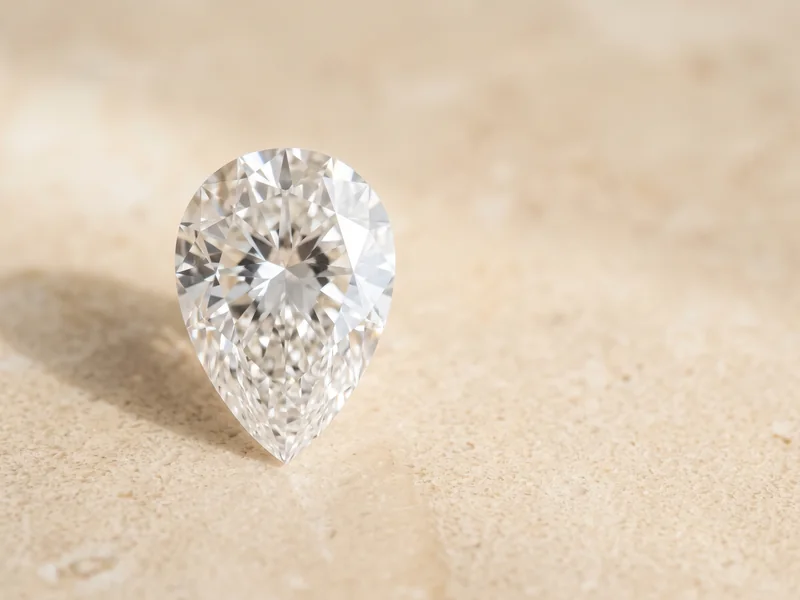 Diamond ShapesPear Cut Diamonds
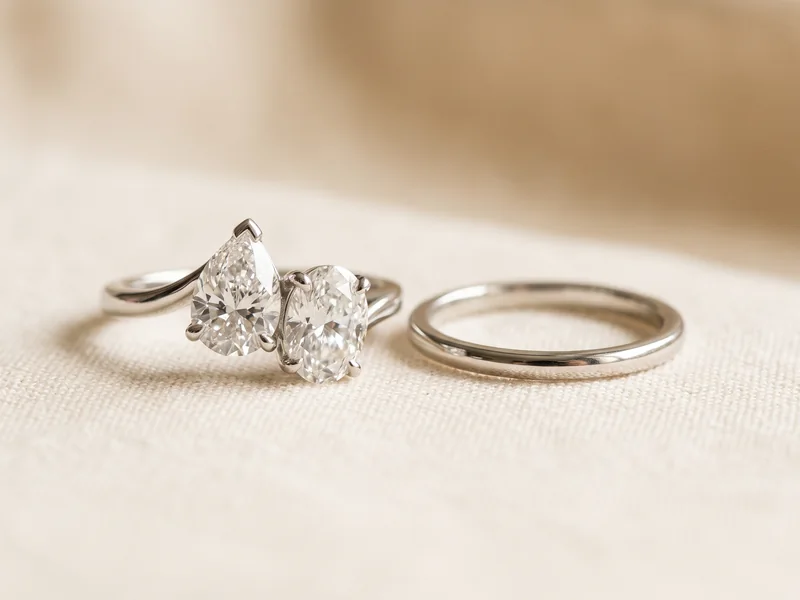 Engagement Rings & SettingsBest Settings for Pear Diamonds
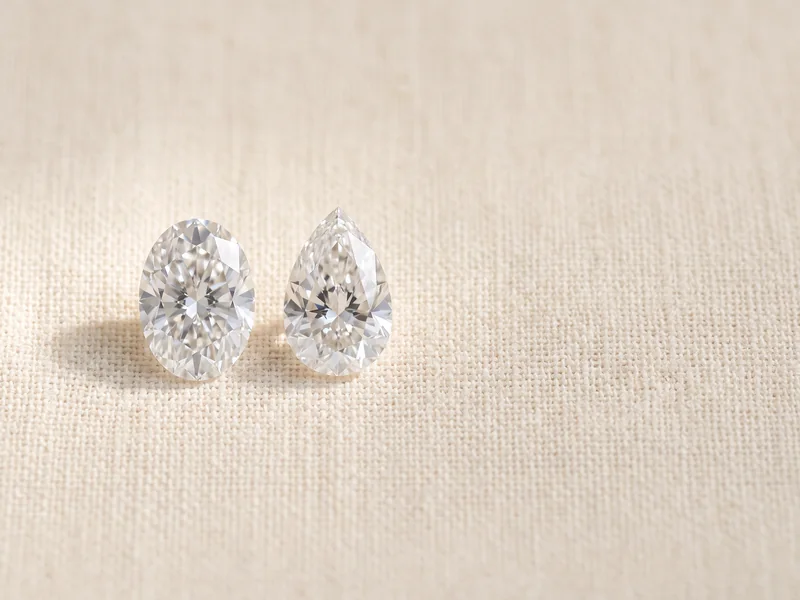 Diamond ShapesProtecting Marquise Diamond PointsDiamond ShapesPear Diamond Length-to-Width Ratio GuideDiamond ShapesUnderstanding Diamond ShapesDiamond ShapesOval vs Pear DiamondsDiamond ShapesMarquise vs Pear Diamonds
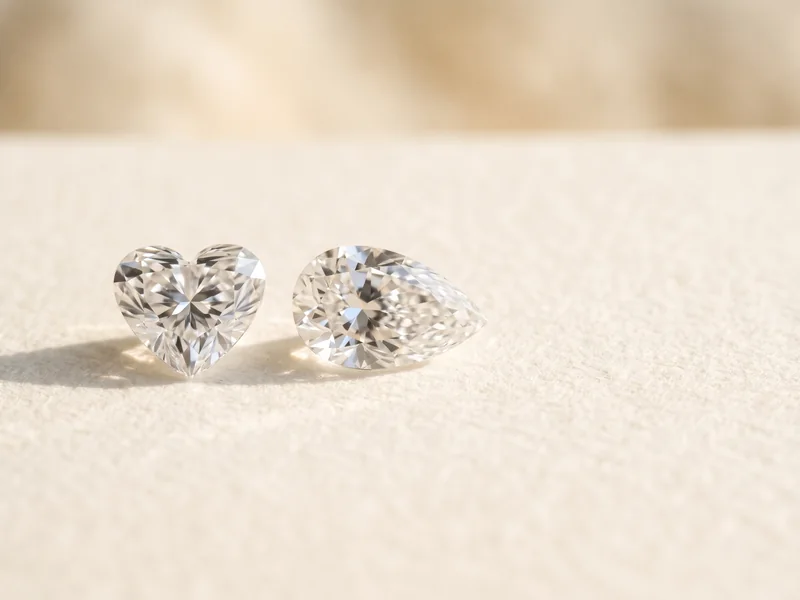 Diamond ShapesHeart vs Pear Shaped Diamonds
Explore more
More guides on this topic
Education