
- Education
- Engagement Rings & Settings
- Knife Edge Band Guide: How It's Built, Wears and Sits Beside a Wedding Band
Engagement Rings & Settings
Knife Edge Band Guide: How It's Built, Wears and Sits Beside a Wedding Band
A knife edge band makes a ring look finer and the centre stone look larger, but its ridge also changes how the ring feels, wears over the years and sits beside a wedding band. Here is what to know before you choose one.
 Reviewed by Raj Sood, Graduate Gemologist (GIA), AJP (GIA)Founder and Graduate Gemologist (GIA) · reviewed 16 November 2026
Quick answer
A knife edge band is a ring shank whose two sides slope up to meet in a ridge along the top, like an inverted V. It looks finer than a flat or rounded band of the same width, suits most centre stone shapes, and is strong because of its depth, though the ridge softens over years of wear.
What is a knife edge band?
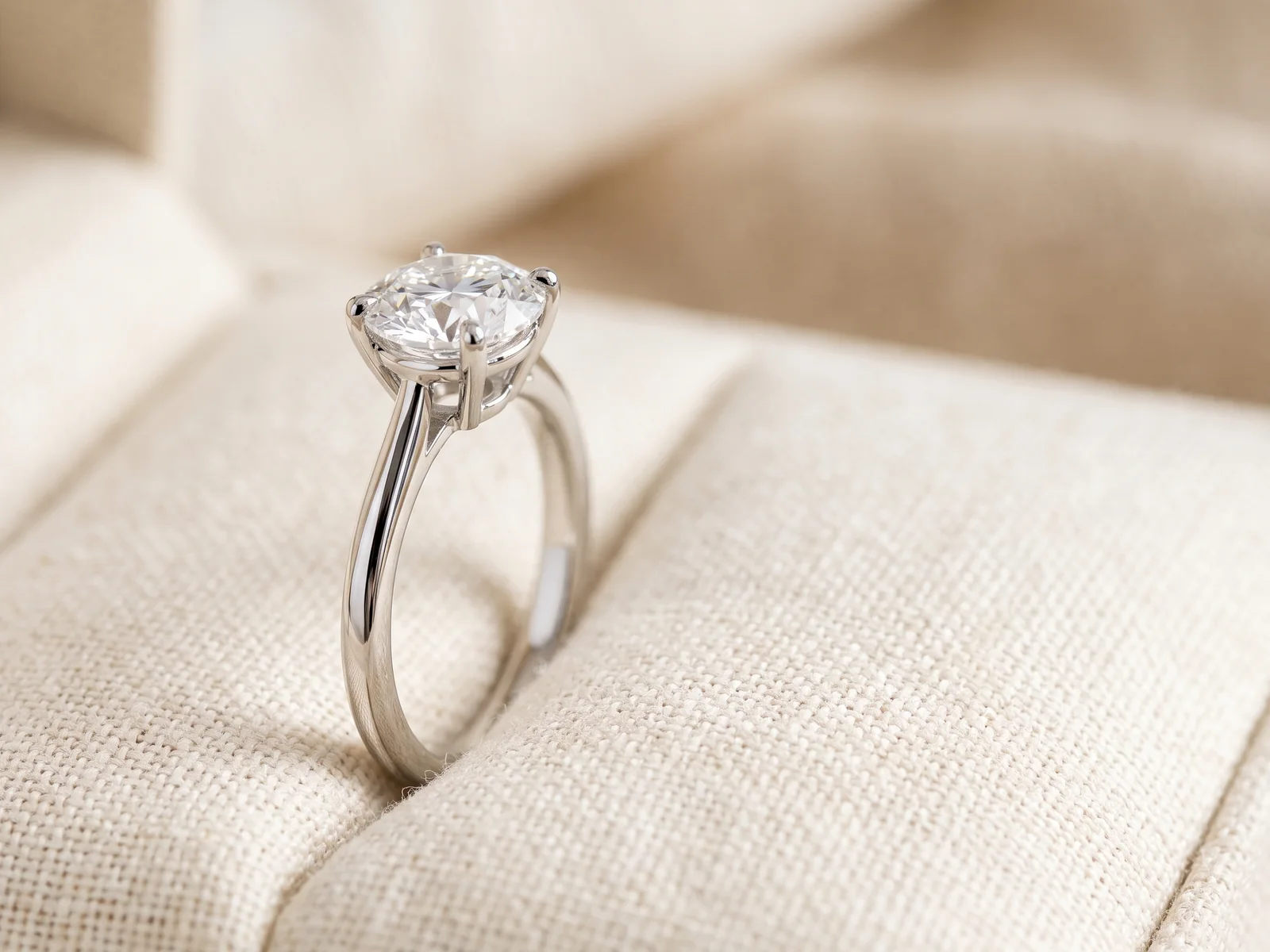
A knife edge band is a ring shank (the part of the ring that circles your finger) shaped so that its two outer faces slope upwards and meet in a ridge along the top. Cut through it and the cross-section looks like a triangle, or an inverted V, sitting on a smooth inner surface. From above you see a fine line of light running down the centre of the band, with each sloping face catching light differently, so the band looks narrower than it really is.
The style was popular in Edwardian and early Art Deco platinum rings, when jewellers wanted rings to look delicate without being weak. It has come back because it suits the modern taste for a slim band under a prominent centre stone. It is a band profile rather than a stone setting, so it can be paired with claws, a bezel, a hidden halo or side stones. To see where it fits among the other options, start with our overview of engagement ring setting styles.
A few words come up again and again in this guide: the ridge (the peak along the top), the shoulders (where the band rises to meet the centre setting), the head (the claws or bezel holding the stone) and comfort fit (a slightly domed inside surface). If any other term is new to you, our jewellery glossary of ring terms explains it in plain English.
How is a knife edge band made?
Most knife edge bands today start as a CAD (computer-aided design) model. The jeweller sets the width at the base, the height from the inside of the ring to the ridge, the angle of the slopes and how sharp the ridge is, then prints a resin model, casts it in metal and finishes it by hand. Older and some hand-made rings are forged from wire and filed to shape. Either way, the ridge has to be filed and polished by hand, because casting alone leaves it slightly soft and uneven.
Typical dimensions sit around 1.8–2.5 mm wide at the base and roughly the same in height. That extra height is the point: it gives the band its stiffness while the narrow top keeps it looking fine. Many designs run the knife edge only around the top half of the ring and soften it into a rounded or D-shaped profile underneath, where it touches the palm and where any future resizing will happen.
| Variant | Ridge | Typical base width | Suits |
|---|---|---|---|
| Full knife edge | Crisp, sharp line | 1.8–2.2 mm | A very fine, vintage-style look |
| Soft knife edge | Gently rounded peak | 2.0–2.5 mm | Everyday wear beside a wedding band |
| Half knife edge | Ridge on the top half only, rounded underneath | 2.0–2.5 mm | Comfort and easier resizing |
| Pavé knife edge | Small diamonds set along one or both slopes | 2.2–2.8 mm | Extra sparkle, with more maintenance |
If you are still deciding how wide to go, our guide to choosing an engagement ring band width walks through finger size, stone size and lifestyle, and the companion page on band widths from 1.8 to 4 mm shows what each millimetre looks like on the hand. A knife edge tends to read about half a millimetre narrower than a round band of the same width, so you can often go slightly wider than you think.
How does a knife edge engagement ring look on the hand?
From above, a knife edge engagement ring shows one bright line where the light hits the ridge, with the slopes falling into softer shadow either side. That contrast makes the band look slimmer and more architectural than a flat or rounded band. It also makes the centre stone look larger: a 1 carat round diamond is about 6.4 mm across, so on a 2 mm knife edge the stone is more than three times the visible width of the band.
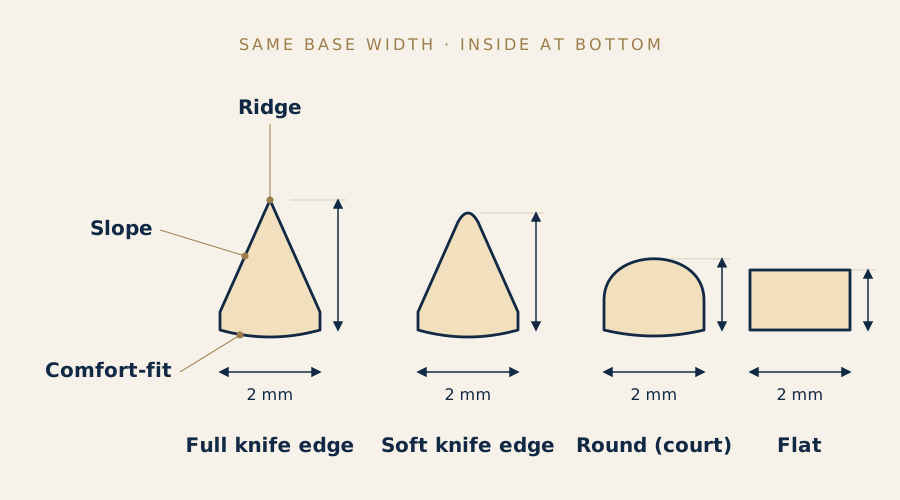
From the side, you see more metal than you might expect, because of the band's height. A well-made knife edge flows smoothly up into the shoulders, sometimes flaring slightly where it meets the head so the join looks deliberate rather than abrupt. Looked at side-on, the ridge should run in one unbroken line all the way round the visible part of the ring.
It is not the only way to make a ring look fine. A tapered band that narrows towards the centre stone draws the eye inwards, a twisted band with intertwined strands adds texture and movement, and a reverse taper band that widens at the top gives a bolder, more modern frame. The knife edge's appeal is that it stays a single clean line from end to end.
Is a knife edge band comfortable to wear?
For most people, yes. The ridge faces outwards, so the inside of the band, the part touching your finger, is usually smooth and comfort fit or gently flat. Many people find a knife edge feels slimmer between the fingers than a round band of the same width, because only the sloping sides touch the neighbouring fingers.
Comfort depends mainly on how sharp the ridge is. A full knife edge with a crisp peak can feel noticeable when you close your hand tightly, carry shopping bags or press your fingers together. A soft knife edge, with the peak rounded to something closer to a narrow dome, feels much like a regular band while keeping most of the look.
- Usually comfortable: slender to average fingers, office or mixed daily wear, a soft ridge with a comfort fit inside.
- Worth trying on first: short or wide fingers, where a tall band can feel bulky at the base of the finger.
- Think carefully: gym, gardening, trades or nursing, where a sharp ridge takes knocks and can press into the neighbouring fingers when gripping.
If you work with your hands, the same principles apply to a man's or a woman's band; our guide to choosing a wedding band for hands-on work covers profiles, metals and widths that cope with daily knocks.
Not sure which one is right?
Send us the stones you are looking at and our gemologist will tell you which to choose and why.
How strong and secure is a knife edge band?
A knife edge looks delicate but is often stiffer than it appears. Resistance to bending depends far more on a band's depth (how tall it is from the inside of the ring) than on its width, so a narrow band with good height can resist being squeezed out of round better than a wider, thinner one. This is why a well-made knife edge can hold a centre stone securely even at about 2 mm wide.
Security also depends on how the head is attached. The narrow ridge gives less metal to join to, so good designs widen or thicken the shoulders slightly where the head sits, and in CAD the head and shank are often modelled as one piece and cast together. A thin shoulder or a small solder joint at that point is the most common weakness we see in mass-made knife edge rings.
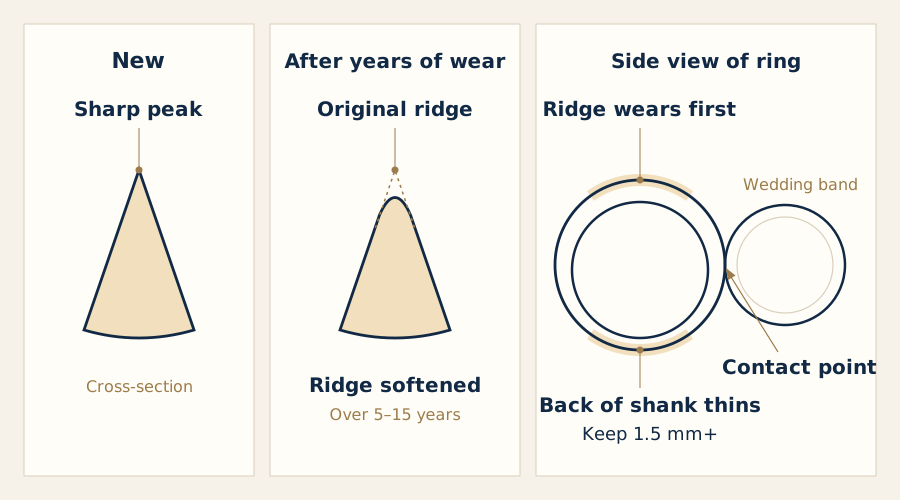
From the repair bench, the pattern of wear is predictable. The ridge is the highest point, so it takes the first contact with benchtops, door handles and any ring worn beside it. Over roughly 5–15 years of daily wear, depending on the metal and your habits, a sharp ridge rounds into a soft one. A jeweller can re-file and polish it, but each time removes a little height. The other place to watch is the back of the shank, under the palm, which thins with every year; aim for at least 1.5 mm of thickness there when the ring is new.
Metal choice changes how the ridge ages. Platinum (usually 950 platinum in Australia) tends to push metal aside as it wears rather than losing it, so the ridge blurs slowly and keeps its volume. 18ct gold, white, yellow or rose, can hold a crisper edge at first but gradually loses metal through wear. 9ct and 14ct gold are harder again but can be more brittle when resized. Our guide to the metals that suit wedding bands compares how each one wears.
Knife edge band resizing is usually possible within about one to two sizes. The jeweller cuts the band at the back, adds or removes metal, solders it and then re-files the slopes so the profile is continuous across the join. A half knife edge, rounded underneath, is the easiest to resize. A pavé knife edge is the hardest, because stones near the join may need to be removed and reset.
Which diamond shapes suit a knife edge band?
Because the band is visually quiet, a knife edge suits almost any centre stone. Some shapes make particularly good use of its single straight line:
- Round brilliant: the classic pairing; the fine band lets the stone's sparkle dominate.
- Oval, pear and marquise: elongated shapes continue the line of the ridge along the finger and make the hand look longer.
- Emerald, Asscher and radiant: crisp step or geometric faceting echoes the ridge's sharp line for an Art Deco feel.
- Cushion and princess: both work well, especially with a slightly wider soft knife edge to balance their corners.
Size and height matter more than shape. Very large stones, roughly above 2 carats, or tall settings can look top-heavy on a 1.8 mm knife edge and put more strain on the shoulders; a 2.2–2.5 mm base usually balances them better. Natural and lab-grown diamonds suit the band equally, since both have the same hardness (10 on the Mohs scale) and the band does not know the difference; just make sure the grading report states clearly whether the diamond is natural or laboratory-grown.
Coloured gemstones work too. Sapphire and ruby (9 on the Mohs scale) and lab-created sapphire cope well with daily wear. Softer stones such as morganite (about 7.5–8) or opal (about 5.5–6.5) are better in a protective bezel or for occasional wear, whatever the band profile.
A knife edge band with pavé sets small diamonds, often around 0.8–1.2 mm, along one or both slopes. It adds sparkle but means more tiny claws to check, and the ridge itself is usually left as plain metal, which is the part that wears first.
Knife edge vs round band: how do they compare?
| Knife edge | Round (court) | Flat | Tapered | Twisted | |
|---|---|---|---|---|---|
| Profile | Two slopes meeting in a ridge | Domed top and inside | Flat top, square edges | Narrows towards the centre stone | Two or more strands wound together |
| Looks from above | Slimmer than its width | True to its width | Wider and bolder | Fine at the top, fuller underneath | Textured, busy |
| Feel | Slim between fingers; sharp ridge can be noticed | Smooth all round | Edges can feel square | Smooth | Can catch slightly |
| How it wears | Ridge softens first | Evenly, slowly | Edges round off | Thin top section wears first | Grooves collect dirt; strands thin |
| Resizing | 1–2 sizes; ridge re-filed | Easy | Easy | Usually easy at the back | Harder; pattern must line up |
| Beside a wedding band | Fine with a straight band if the setting sits high enough | Easy | Can leave a gap | Good, often sits flush | Usually needs a plain band |
In short, a knife edge trades a little everyday ease for a finer look. A round band is the simplest to live with and to resize; a knife edge looks lighter and more crafted, and asks you to accept that its ridge will change over time.
Does a knife edge band sit well with a wedding band?
It can, but it depends on the details. Placed side by side, a knife edge engagement ring and a flat or round wedding band meet at the base of the slope, which leaves a small V-shaped gap at the top. Some people like that line; others prefer the rings to look like a set. Two knife edge bands together, a popular choice for a matching knife edge wedding band, create a pair of ridges with a valley between them.
The bigger question is the centre setting. If the head and its claws or basket sit low, a straight wedding band will hit them and leave a gap. Our guide to how setting height affects wedding band fit explains the measurements, and the page on wedding bands for low-set engagement rings covers what to do if your setting already sits close to the finger.
- Straight band: works if the setting clears the band; simplest to make and resize.
- Contoured or fitted band: curved to follow the head and shoulders; see our guide to custom curved and fitted wedding bands.
- Spacer band: a thin plain band between two rings to stop rubbing; read whether a spacer band between rings is worth it.
Metal-on-metal rubbing is the main long-term issue. The ridge is the contact point, so a wedding band worn beside it will gradually polish it down, and a harder metal will wear a softer one faster. Wearing both rings in the same metal and carat helps them wear evenly. If you already own a wedding band, it is easier to plan around it from the start; see designing an engagement ring around a band you already have. And if you are also choosing a partner's ring, our page on whether couples' wedding bands should match covers ways to echo the knife edge without copying it.
How do you look after a knife edge band?
A knife edge needs the same care as any fine ring, with a little extra attention to the ridge and shoulders:
- Take it off for heavy work: gym weights, gardening and moving furniture are where the ridge takes its hardest knocks.
- Clean the slopes gently: warm water, a drop of mild detergent and a soft toothbrush; pay attention to pavé and the underside of the head.
- Check the shape: if the ring looks slightly oval or the ridge has a flat spot, have it looked at before it bends further.
- Have it inspected yearly: a jeweller checks claws, the head-to-shoulder join and the thickness at the back of the shank.
- Re-plate white gold as needed: rhodium plating on 18ct white gold typically wears from the ridge first, often within 1–2 years of daily wear.
When the ridge eventually softens, you can have it re-filed and polished, or simply enjoy the gentler profile it has become. Our ring and wedding band maintenance checklist sets out what to check, how often, and what each service involves.
How to choose a knife edge band: step by step
- Pick the ridge. Full knife edge for the finest look, soft knife edge for comfort and for wearing beside a wedding band.
- Set the width and height. About 1.8–2.2 mm for slender fingers and stones under 1.5 carats; 2.2–2.5 mm for larger stones or wider fingers.
- Choose the metal. Platinum keeps its volume as the ridge wears; 18ct gold holds a crisp edge at first and loses a little metal over time.
- Check the shoulders. Ask to see the CAD render side-on to confirm the shoulders are thick enough where they meet the head.
- Plan the wedding band now. Confirm the setting height, and whether you want a straight, fitted or matching knife edge band.
- Ask about future resizing. A half knife edge, rounded underneath, keeps resizing simple if your finger size changes.
Next step. When you know what you like, see engagement rings in Melbourne for diamonds in stock and what they cost today. Then design your own engagement ring online, or plan your ring with Raj at our Melbourne CBD showroom. Related pages: loose diamonds in Melbourne and custom engagement rings in Melbourne. Raj Sood, Graduate Gemologist (GIA), sees clients by appointment at Unit 903/125 Swanston St, Melbourne VIC 3000.
Explore ring settings or create your ring
Free consultation
Talk to a gemologist
Compare stones in person or online with Raj Sood, Graduate Gemologist (GIA), AJP (GIA).
Book a consultationShop this shape
FAQ
Common questions
What is a knife edge band on an engagement ring?
It is a band whose two sides slope up to meet in a ridge along the top, so the cross-section looks like an inverted V. It makes the band look finer and the centre stone look larger.
Is a knife edge band comfortable?
For most people, yes, because the inside is smooth and the ridge faces outwards. A sharp ridge can feel noticeable when you grip things, so a soft knife edge is the more comfortable everyday choice.
Are knife edge bands weaker than round bands?
Not if they are made with enough height. A knife edge gets its stiffness from its depth, so a well-proportioned band is strong; the weak points to check are thin shoulders and a thin back of the shank.
Can a knife edge band be resized?
Usually by about one to two sizes. The jeweller re-files the slopes across the join so the ridge stays continuous; pavé knife edge bands are harder to resize because stones near the join may need resetting.
Does a knife edge band wear down over time?
Yes, the ridge is the highest point and softens first, usually over several years of daily wear. It can be re-filed and polished, though each time removes a little metal.
Will a straight wedding band sit next to a knife edge ring?
Often, if the centre setting sits high enough to clear it. If not, a contoured or fitted wedding band can be made to follow the shape of the head.
Ask a gemologist
Not sure which diamond to choose?
Raj Sood is a Graduate Gemologist (GIA) who works alongside our master jewellers. Bring the stones you are considering, or send the reports, and he will tell you honestly which one is better and why.
Keep learning
Related guides
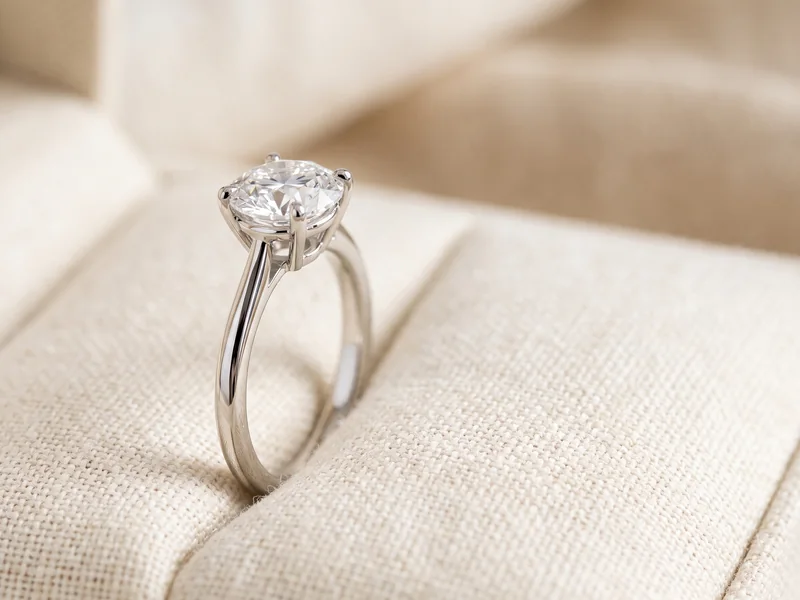 Engagement Rings & SettingsTapered BandsEngagement Rings & SettingsWhat Engagement Ring Band Width Should You Choose?Engagement Rings & SettingsSetting Height and Wedding Band Fit
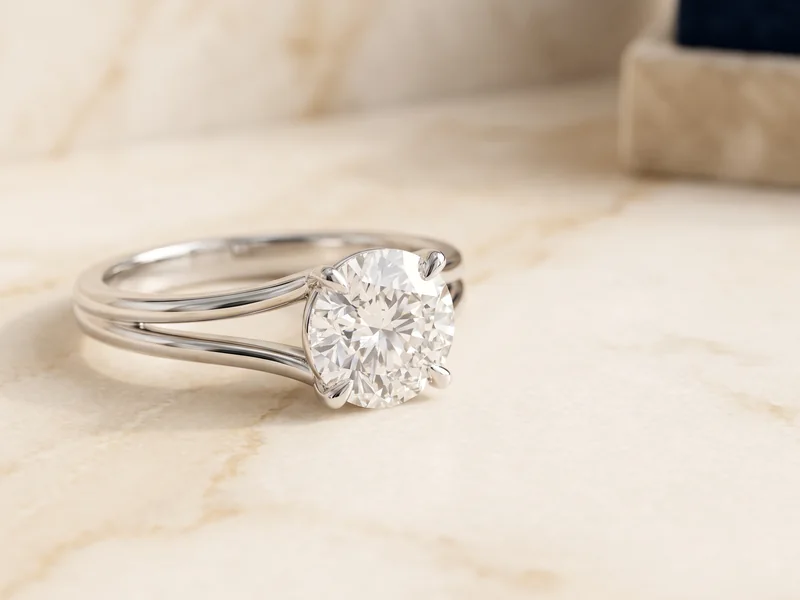 Engagement Rings & SettingsTwisted Bands
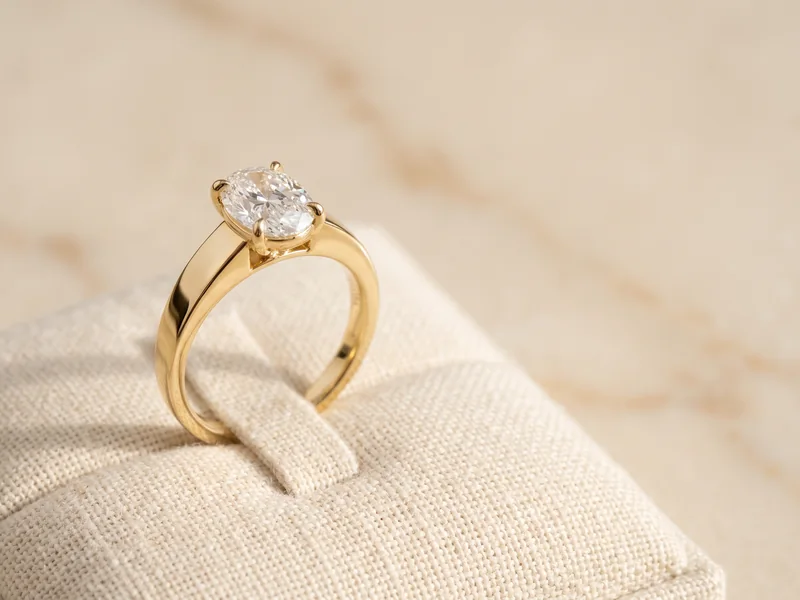 Engagement Rings & SettingsReverse Taper BandsEngagement Rings & SettingsEngagement Ring Band Widths: 1.8 to 4 mm
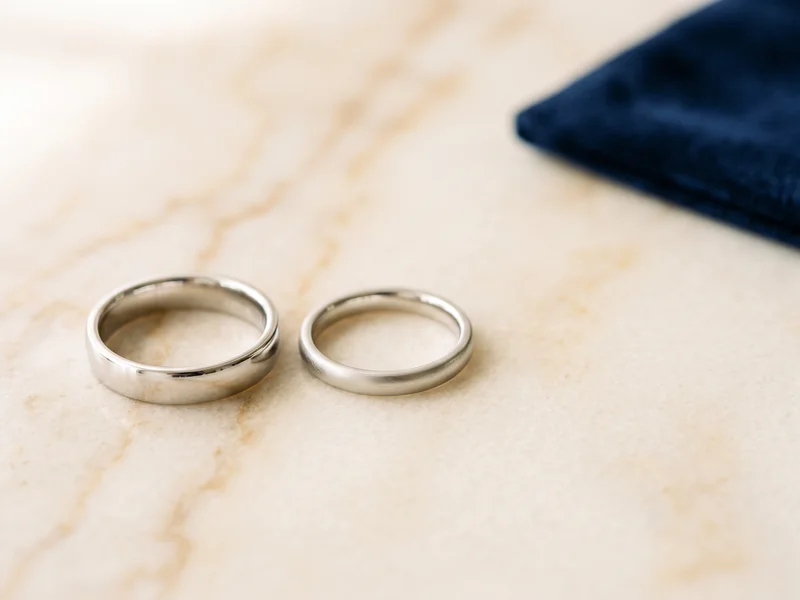 Wedding Bands & EternityDo You Need a Spacer Band Between Rings?
Explore more
More guides on this topic
Education