
Gemstones
Sapphire Engagement Rings: A Melbourne Buying Guide
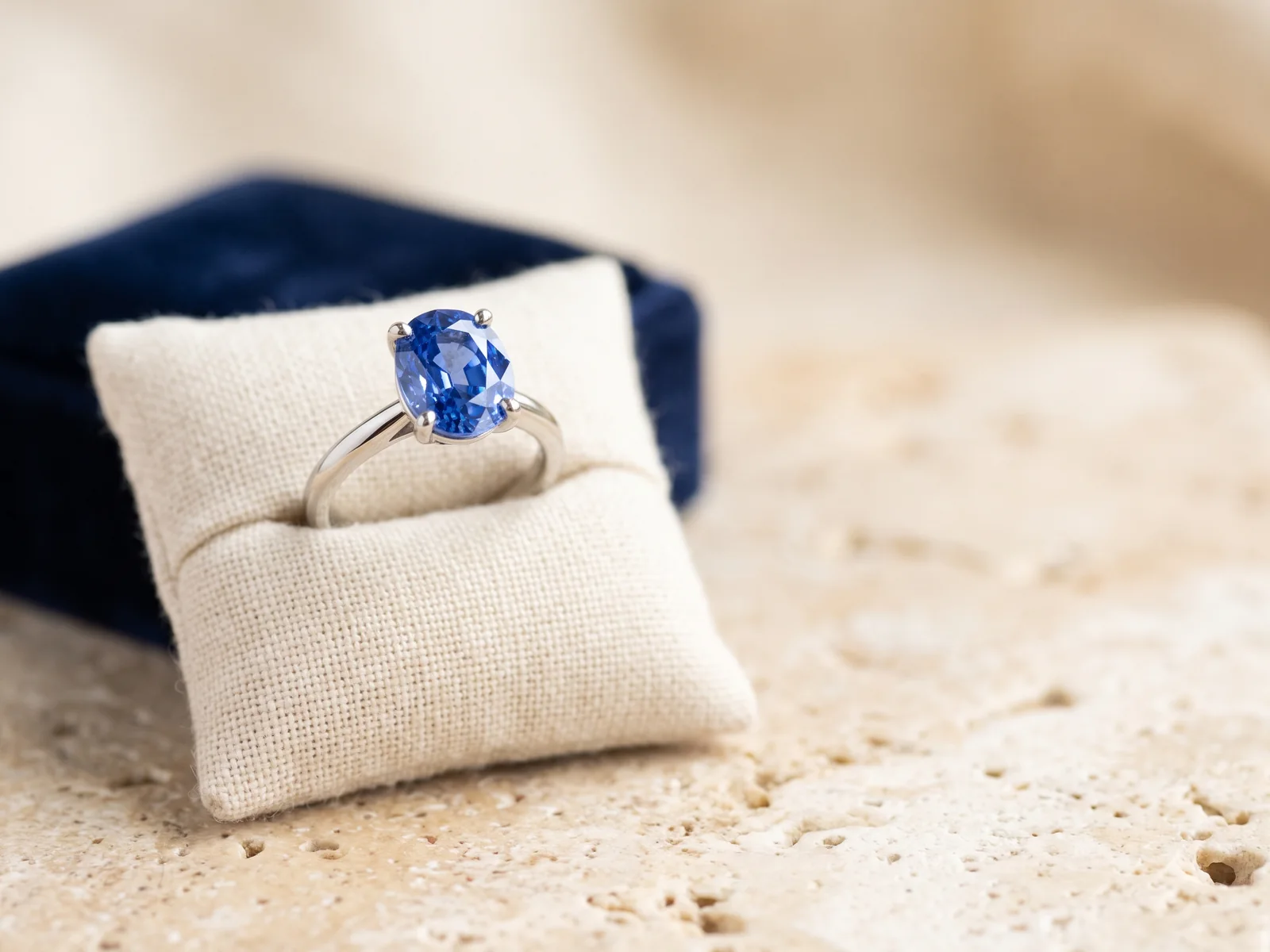
Sapphire engagement rings are the most practical coloured-stone choice for a ring worn every day, and Australia has its own long sapphire story. Here is how to judge colour, treatment, origin and setting before you choose.
 Reviewed by Raj Sood, Graduate Gemologist (GIA), AJP (GIA)Founder and Graduate Gemologist (GIA) · reviewed 16 November 2026
Quick answer
Sapphire is corundum, 9 on the Mohs scale with excellent toughness, so a sapphire engagement ring handles daily wear better than almost any coloured stone. Choose a well-saturated colour, an eye-clean stone without windowing, a disclosed treatment (most are heated) and a protective claw or bezel setting. GemTrove designs custom sapphire rings at its Melbourne CBD showroom.
What are sapphire engagement rings?
A sapphire engagement ring is set with a centre stone of corundum, the mineral form of aluminium oxide (Al2O3). Pure corundum is colourless. Tiny amounts of other elements, called trace elements, give it colour: iron and titanium together make blue, iron alone gives yellow and green, chromium gives pink, and when chromium makes the stone a strong enough red, the trade calls it ruby instead. Every other colour of corundum is sapphire.
Sapphire has been a favourite engagement stone for generations, partly because of famous blue rings and partly for a practical reason: it is one of very few coloured gems tough enough to be worn every day for decades. It is also the September birthstone and the traditional gift for a 45th anniversary. Our wider guide to coloured gemstones places sapphire alongside the other ring stones, and the sapphire gemstone in depth covers its mineralogy and history.
For the gemmologist, a few numbers identify sapphire. Its refractive index (how strongly it bends light) is about 1.762–1.770, its birefringence (the gap between its two refractive indices) is 0.008–0.010, and its specific gravity (density compared with water) is about 4.00. Sapphire is also pleochroic, meaning it shows slightly different colours when viewed along different directions; a blue stone may look violetish blue one way and greenish blue another. Any unfamiliar term is explained in our plain-English jewellery glossary.
Are sapphires good for engagement rings? Hardness and toughness compared
Two different properties decide how a ring stone survives daily life. Hardness is resistance to scratching, measured on the Mohs scale from 1 to 10. Toughness is resistance to chipping and breaking when knocked. Sapphire scores 9 for hardness, so household dust (mostly quartz, about 7) cannot scratch it, and its toughness is rated excellent because it has no cleavage plane, a direction along which a crystal splits easily. Diamond is harder, but it does have cleavage, so a hard knock on a thin edge can chip it.
| Gem | Mohs hardness | Toughness | Suitability for an everyday ring |
|---|---|---|---|
| Diamond | 10 | Good (has cleavage) | Excellent |
| Sapphire and ruby (corundum) | 9 | Excellent | Excellent |
| Moissanite (lab-created) | 9.25 | Good | Very good |
| Spinel | 8 | Good | Very good |
| Aquamarine and morganite | 7.5–8 | Good | Good, with a protective setting |
| Emerald | 7.5–8 | Poor to good (usually included and fractured) | Needs care; a bezel helps |
| Tanzanite | 6–7 | Fair to poor (has cleavage) | Occasional wear |
| Opal | 5.5–6.5 | Poor to fair | Occasional wear, protected setting |
That table is why so many people who want colour land on sapphire. It will still pick up wear on the facet edges over many years, and a stone with large surface-reaching fractures is weaker than a clean one, but for an everyday ring it is the most reliable coloured option. If you are weighing it against the traditional choice, see our guide to diamond and sapphire compared for engagement rings. If green is your colour, our page on why emerald needs more care than sapphire sets out the trade-off.
Related guideDiamond vs Sapphire Engagement RingsWhat colours do sapphire engagement rings come in?
Blue is the classic, but sapphire comes in almost every colour. Coloured sapphires other than blue are called fancy sapphires, and they can cost noticeably less than a fine blue of the same size.
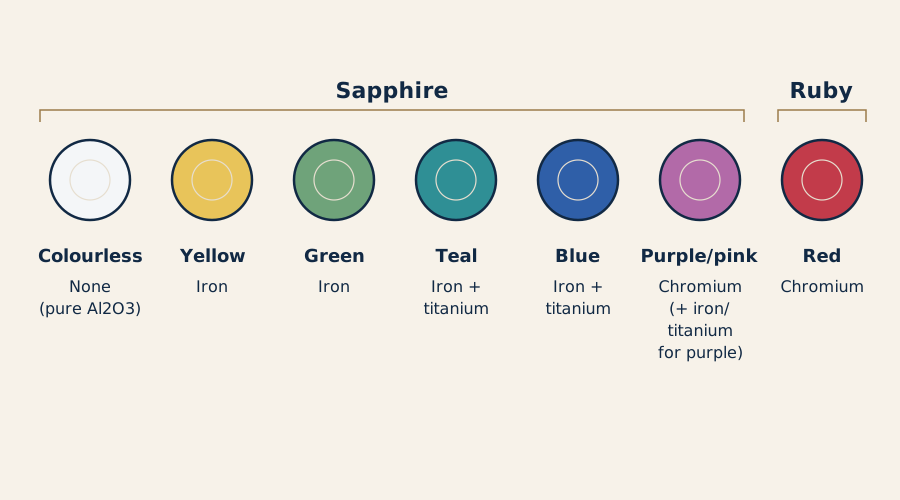
- Blue: from light cornflower to deep royal and inky navy. The most sought-after blues are medium to medium-dark in tone with strong saturation.
- Colourless: white sapphire as a colourless option is far less bright than diamond (RI 1.77 against 2.42) but is durable and much cheaper.
- Yellow and green: iron-driven colours. Yellow sapphire runs from lemon to golden, and green sapphire from mint to deep forest, often from Australia.
- Purple, pink and orange: see purple and violet sapphire and orange sapphire for the warmer and cooler ends of the range.
- Padparadscha: the pinkish-orange padparadscha, named after the lotus flower, is one of the rarest and most valued sapphire colours.
- Colour-change: colour-change sapphire that shifts under different light may look blue in daylight and purple under warm indoor light.
- Teal and parti: blue-green teal sapphire engagement rings have become very popular, and multi-coloured parti sapphires show two or more colours, often blue, green and yellow, in one stone.
How do you judge sapphire quality?
Sapphires have no single grading scale like the diamond D–Z colour scale, so quality is judged by eye against the four Cs, with colour carrying most of the value.
- Colour: described by hue (the basic colour, such as blue or violetish blue), tone (how light or dark) and saturation (how strong or pure). A stone too dark looks black at night; too light looks washed out; low saturation looks grey.
- Clarity: most natural sapphires have some inclusions. Fine rutile needles called silk are common and can soften the colour pleasantly. Coloured stones are judged as eye-clean or not, rather than by the VS and SI grades used for diamonds.
- Cut: sapphire is usually cut for weight and colour, not just sparkle. Watch for windowing and extinction (see the diagram).
- Carat: sapphire is denser than diamond, so a 1 ct sapphire looks a little smaller than a 1 ct diamond of the same shape; a 1 ct round sapphire is roughly 6.0 mm across, against about 6.4 mm for a diamond.
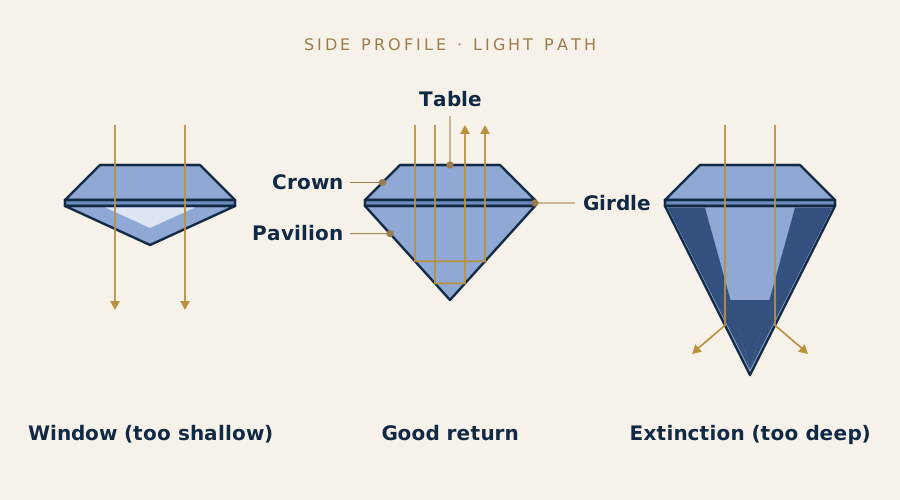
Windowing is a washed-out, see-through patch in the centre of the stone, caused by a pavilion (the lower half) that is too shallow. Extinction is the opposite: dark areas where light is lost, common in deep or dark stones. A little extinction is normal and adds contrast. Cutters also orient blue sapphire so you look down the direction that shows the purest blue, avoiding the greenish pleochroic colour. Our guide on how to judge a blue sapphire's hue, tone and saturation works through examples.
Not sure which one is right?
Send us the stones you are looking at and our gemologist will tell you which to choose and why.
Heated vs unheated sapphire: how can you tell natural, treated and lab-created stones apart?
Most sapphires on the market have been heat-treated: gently heated, often to well over 1,000 °C, to improve colour and clarity by dissolving silk or adjusting the iron and titanium. Heating is stable, permanent and accepted across the trade, but it must be disclosed. Unheated sapphires of fine colour are rarer and cost more, often considerably more at larger sizes.
| Type | What it is | How a gemmologist detects it | Effect on value |
|---|---|---|---|
| Unheated natural | Natural sapphire, no treatment | Intact silk and unaltered inclusions; lab report | Highest for the quality |
| Heated natural | Natural sapphire, heat only | Altered or dotted silk, discoid stress fractures around crystals | The market norm |
| Beryllium diffused | Beryllium heated into the stone to create or change colour, often orange or yellow | Colour layer may follow the stone's outline, but often penetrates the whole stone; advanced lab testing (e.g. LA-ICP-MS) | Much lower than heated |
| Lattice (titanium) diffused | Blue colour added in a thin surface layer | Colour outlining facet edges when immersed | Much lower; recutting can remove colour |
| Glass filled | Fractures filled with lead glass (more common in ruby) | Gas bubbles and flash effect in fractures | Lowest; fragile to heat and chemicals |
| Lab-created | Synthetic corundum grown in a laboratory | Curved growth lines and gas bubbles (flame fusion), flux residue (flux-grown) | A small fraction of natural |
Lab-created sapphire (also called synthetic sapphire) has the same chemistry, hardness and refractive index as natural sapphire. It has been made since the early 1900s by the Verneuil flame-fusion method, and today also by flux and Czochralski (crystal-pulling) methods. It is a legitimate, durable choice at a low price, but it must always be sold as lab-created. Natural sapphire is chosen for its rarity and geological history, not as an investment.
For any significant stone, ask for a report from an independent laboratory such as GIA, SSEF, Gübelin or AGL. It will state whether the stone is natural or lab-created, whether there is evidence of heating or other treatment, and, on request, the likely country of origin.
Where do sapphires come from, and what makes an Australian sapphire engagement ring different?
Origin affects the typical look of a sapphire, and for some sources it strongly affects price. It is not a quality grade on its own: a fine Australian stone beats a poor Ceylon stone every time.
| Origin | Typical look | Notes |
|---|---|---|
| Australia (New England, NSW; Central Queensland gemfields) | Deep, dark blues; teal, green, yellow and parti colours | Basalt-related and iron-rich; strong pleochroism |
| Sri Lanka (Ceylon) | Light to medium bright blues; also yellow and padparadscha | Lower iron gives lively, lighter colour |
| Madagascar | Wide range, including Ceylon-like blues and pinks | A major source since the late 1990s |
| Myanmar (Burma) | Rich, saturated royal blues | Long reputation for fine blue |
| Kashmir | Soft, velvety cornflower blue | Historic and very rare; little modern production |
| Montana, USA | Light steely blues, teal and green | Often small sizes |
| Thailand and Cambodia | Dark blues | Thailand is also a major cutting and heating centre |
Australia has been a significant sapphire producer for well over a century. The fields around Inverell and Glen Innes in New England, New South Wales, and around Anakie, Rubyvale and Sapphire in Central Queensland, supplied a large share of the world's sapphire in the 1970s and 1980s. Australian sapphires formed deep underground and were carried up by volcanic basalt. Their higher iron content gives deep blues and the blue-green and yellow-green colours that suit modern teal and parti rings.
Because Australian blues can be very dark, careful cutting and orientation matter more than usual. See our guide to rings set with Australian-mined sapphire, and compare teal versus classic blue if you are torn between the two. For the opposite end of the blue scale, read what Ceylon origin really means.
What is the best setting for a sapphire engagement ring?
Sapphire's toughness gives you more freedom than most coloured stones, so the setting can be chosen mainly for looks and comfort.
- Four or six claws: show the most of the stone and let light in from the sides. Six claws add security for larger stones.
- Bezel: a rim of metal around the stone. Very secure and practical for active hands; it can slightly darken a stone that is already deep in tone.
- Diamond halo: a ring of small diamonds around the centre. Adds sparkle that sapphire's lower refractive index cannot match, and makes the centre look larger.
- Three-stone: a sapphire between two diamonds, or the reverse, is a long-standing classic.
- Metal: platinum and white gold keep blue looking cool and crisp; yellow and rose gold flatter yellow, orange, padparadscha and teal stones and warm up blue.
Sapphires are cut in every shape, but ovals and cushions are the most common because they keep the most weight from the rough crystal. Rounds usually cost more per carat for the same reason. If a stone has been glass-filled, avoid ultrasonic cleaners, steam and jewellers' heat; heated and unheated sapphires are safe to clean in warm soapy water with a soft brush.
What affects the price of a sapphire engagement ring?
Sapphire prices depend far more on colour and treatment than on carat weight alone, and they move with the market. Rather than a price list, these are the factors that move a sapphire up or down:
| Factor | Lower price | Higher price |
|---|---|---|
| Origin of the stone | Lab-created sapphire | Natural sapphire |
| Treatment | Heated (stable, widely accepted) | Unheated, with a lab report |
| Colour | Lighter, or less saturated | Medium to medium-dark, strongly saturated |
| Colour type | Many fancy colours (yellow, green, many parti) | Fine blue, pink and padparadscha |
| Size | Under 1 ct | Above 2 ct, where fine stones become rare |
The ring itself adds the cost of the metal, any diamonds and the hand work. Tell us your budget and we will show you sapphires that fit it, with current prices for each stone.
Browse natural gemstones, including sapphires
How to choose a sapphire engagement ring, step by step
- Pick your colour first. Decide between blue, teal, parti or another fancy colour, and natural or lab-created, before comparing stones.
- Judge the colour in two lights. Check daylight and warm indoor light; look for strong saturation and a tone that is neither inky nor pale.
- Look face-up for windowing. Tilt the stone and make sure the centre does not go see-through or grey.
- Check clarity by eye. Aim for eye-clean, and avoid fractures that reach the surface near claws or edges.
- Ask about treatment and origin. Get the treatment in writing, and a laboratory report for unheated, high-value or origin-specific stones.
- Match the setting and metal. White metal for cool blues, yellow or rose gold for warm colours, and a bezel or six claws for very active hands.
Where can you buy a sapphire engagement ring in Melbourne?
At GemTrove's Melbourne CBD showroom you can compare sapphires side by side in daylight and warm light with Raj Sood, a Graduate Gemologist (GIA), then have a ring designed around the stone you choose. Natural and lab-created sapphires are always labelled as such.
- Book a consultation. Book an appointment and tell us the colour, shape and budget you have in mind.
- Compare stones. See blue, teal, parti and other colours together, with any treatment disclosed.
- Design the ring. Our CAD designers model the setting around your sapphire, alone or with diamonds, and you approve the 3D renders.
- Handmade in Melbourne. Our master jewellers make the ring in 3–5 weeks.
Read more about custom sapphire engagement rings in Melbourne and how our custom rings are made, or start designing your ring online.
- Showroom: Unit 903/125 Swanston St, Melbourne VIC 3000 (Level 9), by appointment.
- Hours: Monday to Friday 9:30 am to 5:30 pm, Saturday 11:30 am to 1:00 pm, Sunday closed.
- Phone: 0488 878 000
Thinking of a sapphire ring? GemTrove makes custom sapphire engagement rings in Melbourne, with the stone chosen for colour and its treatment disclosed. See how a sapphire ring is designed and made, or compare custom engagement rings in Melbourne. Please check the lab report before you commit. Related pages: loose diamonds in Melbourne and engagement rings in Melbourne. Raj Sood, Graduate Gemologist (GIA), sees clients by appointment at Unit 903/125 Swanston St, Melbourne VIC 3000.
Free consultation
Talk to a gemologist
Compare stones in person or online with Raj Sood, Graduate Gemologist (GIA), AJP (GIA).
Book a consultationShop this shape
FAQ
Common questions
Are sapphires good for engagement rings?
Yes. Sapphire is 9 on the Mohs scale with excellent toughness, so it handles everyday wear better than almost every coloured gem. Among natural gems, only diamond is harder.
Is a heated sapphire worth less than an unheated one?
Generally, yes. Heating is a stable, accepted treatment and is the market norm, but unheated sapphires of fine colour are rarer, so they usually cost more for the same size and colour.
Are lab-created sapphires real sapphires?
Lab-created sapphires have the same chemistry and hardness as natural sapphire, but they are grown in a laboratory and must be sold as lab-created or synthetic. They cost a small fraction of a natural stone.
Why are Australian sapphires so dark?
Australian sapphires formed in iron-rich conditions linked to basalt, and iron deepens the blue and adds green. Careful cutting and orientation can lighten the face-up colour.
Does a sapphire scratch or chip easily?
It resists scratching from everyday materials and has no cleavage plane, so it rarely chips. Facet edges can show light wear after many years, which a jeweller can repolish.
What colour sapphire is most popular for engagement rings?
Blue is still the most chosen, but teal, parti and padparadscha have grown strongly in popularity, especially teal and parti stones from Australia.
Where can I buy a sapphire engagement ring in Melbourne?
At GemTrove, Unit 903/125 Swanston St, Melbourne VIC 3000. Visits are by appointment with Raj Sood, a Graduate Gemologist (GIA), and every ring is designed around your sapphire and handmade in Melbourne.
Can a sapphire engagement ring have diamonds too?
Yes. A sapphire can be set with a diamond halo, diamond side stones or beside a diamond in a toi et moi design.
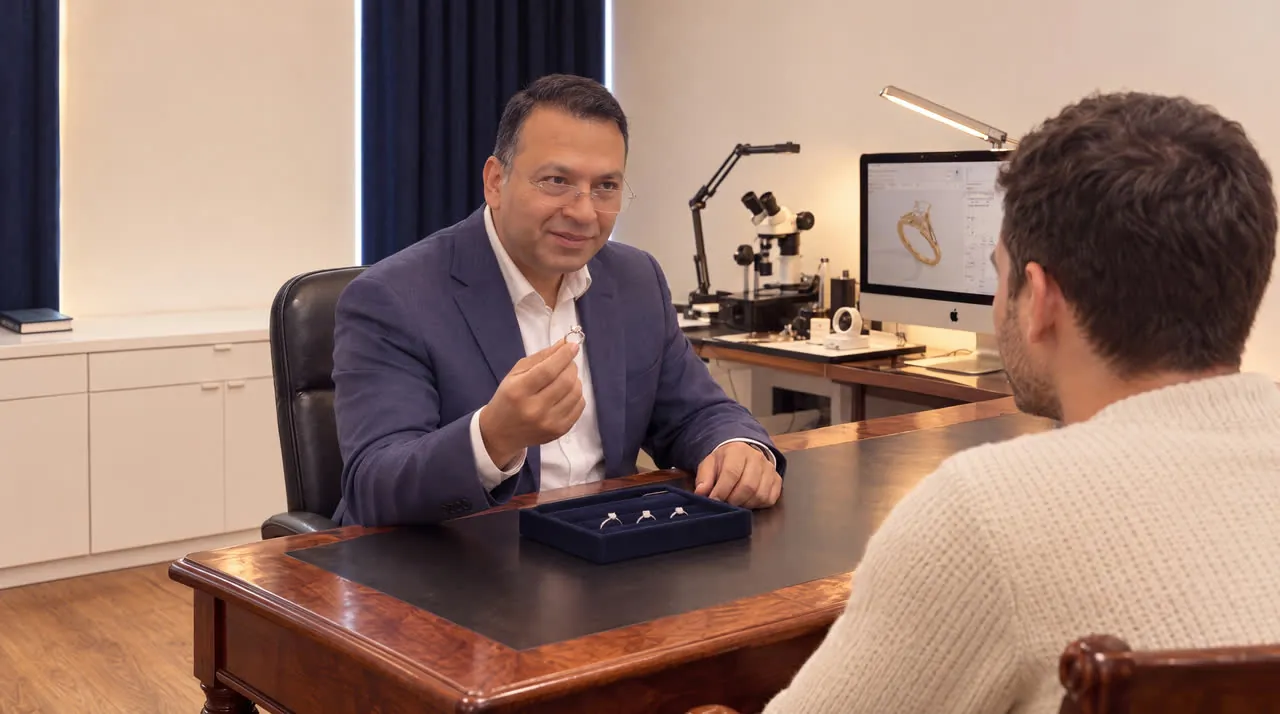
Ask a gemologist
Not sure which diamond to choose?
Raj Sood is a Graduate Gemologist (GIA) who works alongside our master jewellers. Bring the stones you are considering, or send the reports, and he will tell you honestly which one is better and why.
Keep learning
Related guides
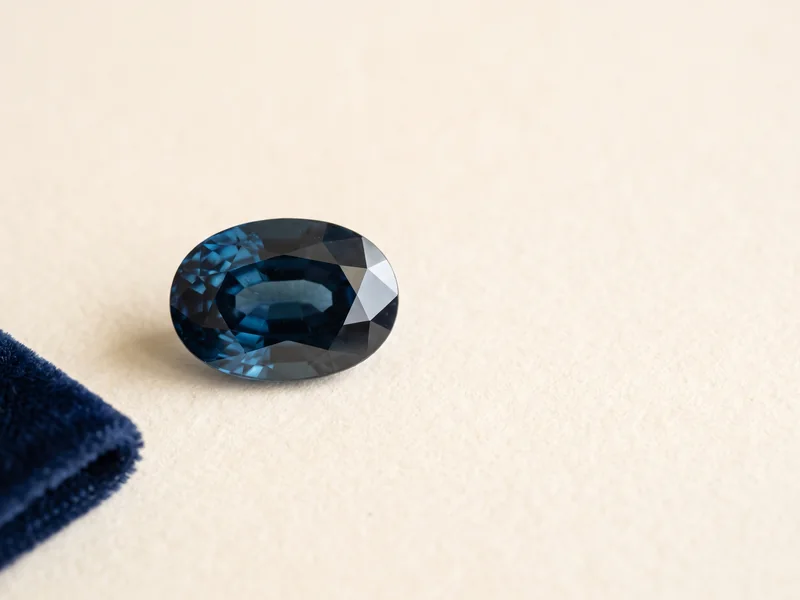 GemstonesAustralian Sapphire Engagement Rings
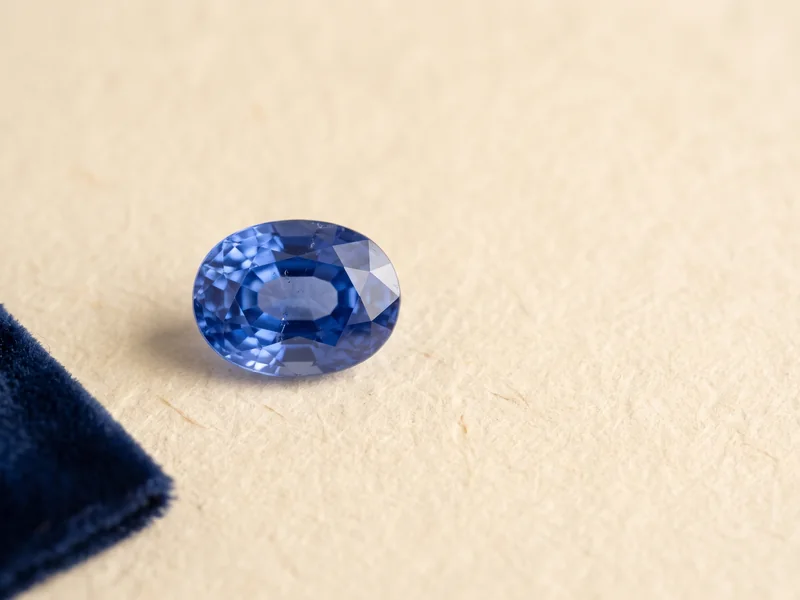 GemstonesHow to Judge Blue Sapphire Quality
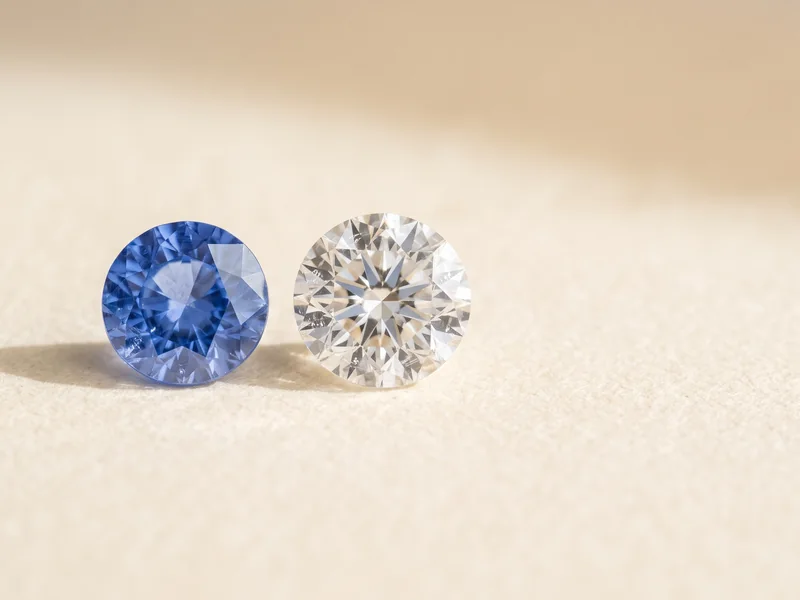 GemstonesDiamond vs Sapphire Engagement Rings
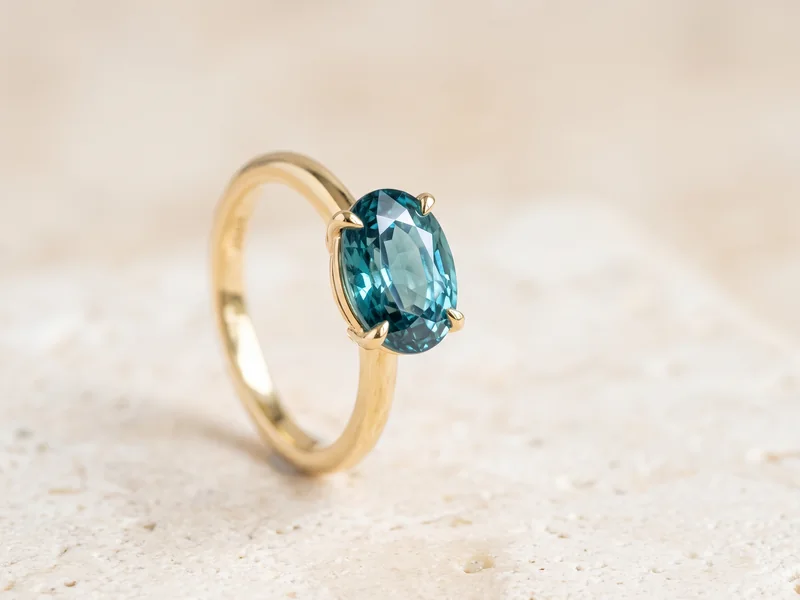 GemstonesTeal Sapphire Engagement Rings
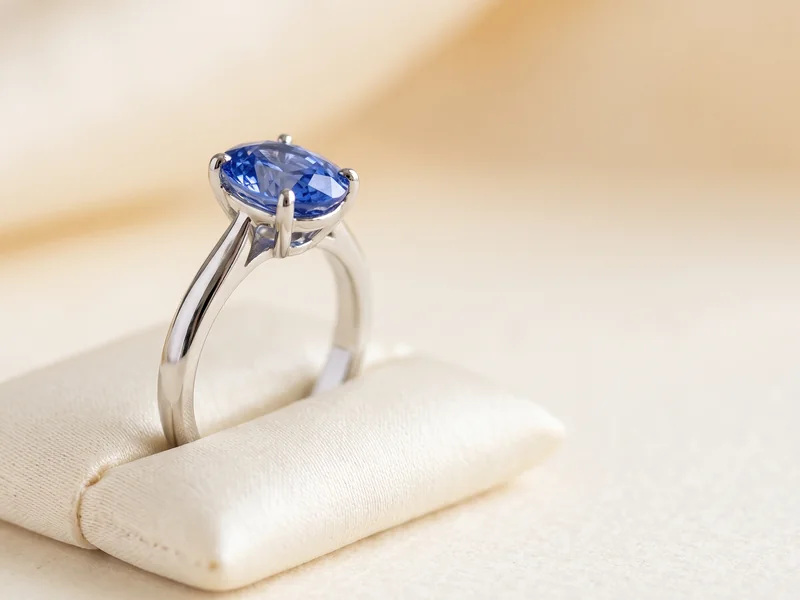 GemstonesCustom Sapphire Engagement Rings MelbourneGemstonesGemstones | Coloured Gemstones, Birthstones and Custom Jewellery
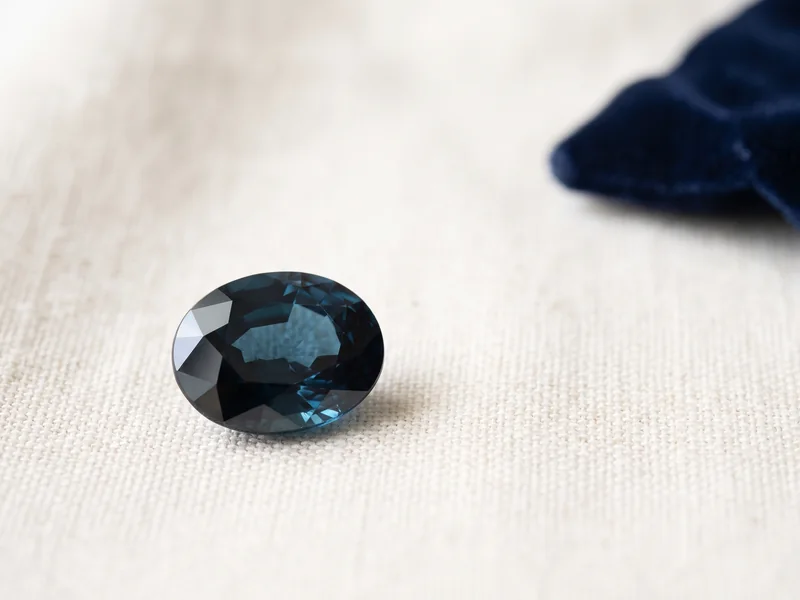 GemstonesSapphire Gemstones
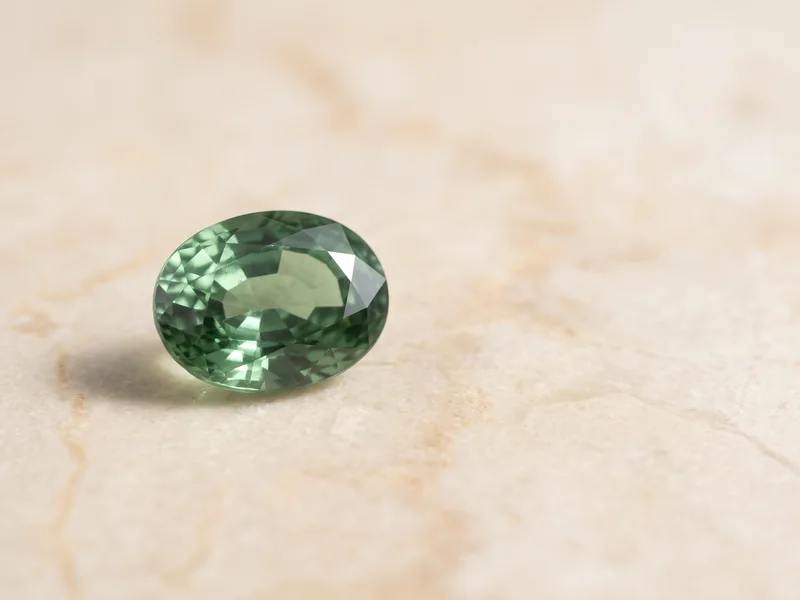 GemstonesGreen Sapphire
Explore more
More guides on this topic
Education