
- Education
- Care, Repairs & Remodelling
- Diamond Upgrade Guide: Trading Up, Resetting and Keeping Your Ring
Care, Repairs & Remodelling
Diamond Upgrade Guide: Trading Up, Resetting and Keeping Your Ring
A diamond upgrade is part stone purchase, part workshop job, and the workshop part is the one most people forget. Here is what to check before you buy the new stone, so the ring you love can actually hold it.
 Reviewed by Raj Sood, Graduate Gemologist (GIA), AJP (GIA)Founder and Graduate Gemologist (GIA) · reviewed 17 November 2026
Quick answer
A diamond upgrade means swapping your centre stone for a larger or better-graded one, usually keeping the ring's design. First check whether your setting's head fits the new stone's millimetre size, ask how any trade-in credit is calculated, compare natural and lab-grown prices, then have the claws and shank checked and your insurance valuation updated.
What is a diamond upgrade?
A diamond upgrade means replacing the centre stone in a ring, usually an engagement ring, with one that is larger, better cut, or higher in colour or clarity. Most people keep the look of the original ring and change only the stone. But an upgrade can also mean a new head (the cluster of claws that holds the centre stone), a new halo or a completely new mount. If any term here is new, our plain-English jewellery glossary explains it.
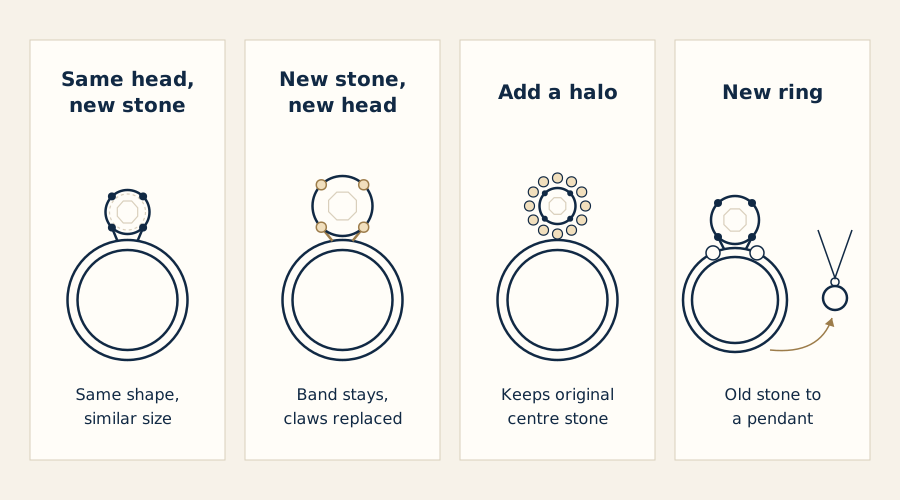
People upgrade for an anniversary, because the first ring was bought on a tight budget, or because they now know more about cut and want a brighter stone. There are four broad routes:
- Swap the centre stone, keep the ring: works when the new stone is the same shape and within a few tenths of a millimetre of the old one.
- Swap the stone and the head: needed when the new stone is noticeably larger or a different shape. The band stays; the claws are replaced.
- Add around the stone you have: a halo, side stones or a matching band make the ring look bigger without replacing the centre.
- Start again: a new ring designed around the new diamond, with the original stone moved into a pendant, studs or a right-hand ring.
Can you put a bigger diamond in the same setting?
Sometimes, but only if the sizes are close. A claw head is made for a particular diameter. When a stone is set, the jeweller cuts a small notch called the seat into each claw, so the stone's girdle (its thin outer edge) locks in place. A new stone within roughly 0.1–0.3 mm of the old one can often go into the same head once the seats are recut. A bigger jump means a new head.
| Round carat weight | Typical diameter | Will a 1 ct (6.4 mm) head take it? |
|---|---|---|
| 0.90 ct | about 6.1–6.3 mm | Often, with recut seats |
| 1.00 ct | about 6.4–6.5 mm | Yes, the original size |
| 1.25 ct | about 6.8–7.0 mm | Usually needs a new head |
| 1.50 ct | about 7.3–7.5 mm | New head |
| 2.00 ct | about 8.0–8.2 mm | New head, and check the band can carry it |
| 3.00 ct | about 9.2–9.4 mm | New head, often a new ring |
Millimetres matter more than carats. Two 1.50 ct rounds can differ by 0.2–0.3 mm in diameter depending on how deeply they are cut, and fancy shapes such as ovals and cushions vary even more. Give your jeweller the measurements from the new stone's grading report, not just the weight.
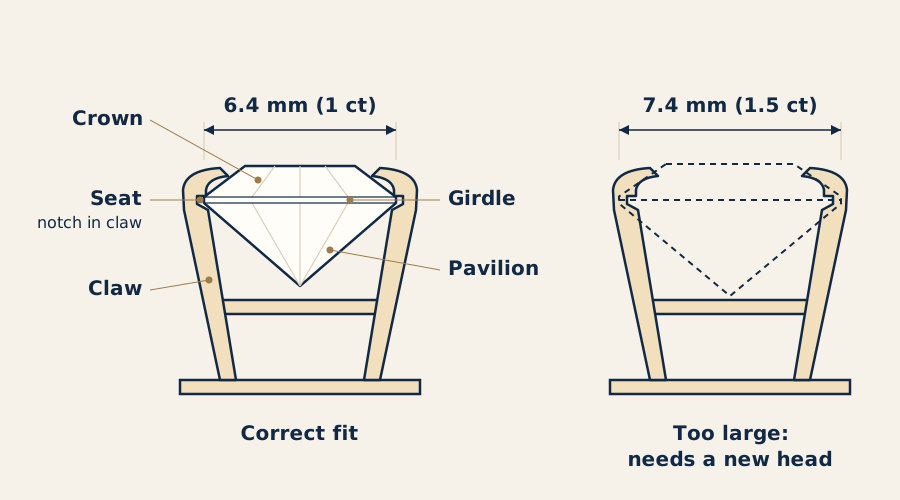
Changing shape, say from a round to an oval, always needs a new head, because the claw positions follow the outline. Stretching old claws open to fit a bigger stone is a false economy: metal that is bent back and forth becomes hard and brittle, and a cracked claw is how stones get lost.
Height changes too. A larger diamond is deeper, so the new head usually sits higher. That can change how a wedding band sits beside it and makes the ring more top-heavy, which is why some people add sizing beads or a sizing bar to stop a heavier ring spinning.
How does a diamond trade-in work in Australia?
A trade-in is when a jeweller takes your existing diamond as part-payment for a new one. Policies vary a lot, so ask for the terms in writing. Some retailers credit the original purchase price, often only when the new stone costs at least a set multiple of the old one. Others credit their current buying price, which is usually well below retail. Many only accept stones they sold, and most want the original grading report.
| Option | What you get | Good to know |
|---|---|---|
| Trade-in with the original retailer | Credit towards the new stone | Check minimum-spend rules and whether the stone must be re-checked |
| Trade-in elsewhere | Credit at that jeweller's assessment | The stone will be tested and graded; offers vary |
| Sell to a dealer or privately | Cash | Buyers pay trade-style prices, below what you paid at retail |
| Reuse the old stone | A second piece of jewellery | A pendant or right-hand ring suits a single stone; studs need a matched pair |
| Keep the stone, add a halo | A bigger look, same diamond | The most sentimental route; no stone purchase at all |
A trade-in offer is not the same as a valuation. An insurance valuation states what it would cost to replace the ring at retail; a buyer's offer reflects what they can sell it for. Our page on how a valuation differs from a diamond certificate explains why the two figures rarely match.
Lab-grown diamonds currently have limited resale and trade-in value, because prices for new lab-grown stones have fallen quickly. If your current stone is lab-grown, plan to keep or reuse it rather than count on a trade-in credit.
Should you upgrade to a lab-grown or natural diamond?
Both are real diamond: carbon crystal, 10 on the Mohs hardness scale, with a refractive index of about 2.42. A natural diamond formed in the earth over millions of years and was mined. A lab-grown diamond (also called laboratory-grown) was grown in a laboratory, usually by the CVD or HPHT method, over weeks. They look the same to the eye; a grading report from GIA or IGI states the origin, and most lab-grown stones carry a tiny laser inscription on the girdle saying so.
Upgrading to a lab-grown diamond lets a big jump in size cost much less. Mixing origins is fine, for example a lab-grown centre in a ring with natural pavé, as long as it is recorded accurately on your valuation and on any future paperwork.
| Round, G colour, VS2, Excellent cut | Lab-grown (approx. AUD) | Natural (approx. AUD) |
|---|---|---|
| 1.00 ct | $1,000–$3,000 | $8,000–$16,000 |
| 1.50 ct | $1,500–$4,500 | $15,000–$30,000 |
| 2.00 ct | $2,000–$6,000 | $25,000–$55,000 |
These are broad ranges only, and lab-grown prices in particular keep moving. Natural diamonds are rarer and hold more resale value than lab-grown, but neither is an investment: choose on what you want to wear and what you want to spend.
Not sure which one is right?
Send us the stones you are looking at and our gemologist will tell you which to choose and why.
What should you check in the new diamond?
An upgrade is a chance to fix whatever bothered you about the first stone. Check these before you commit:
- Cut first: for rounds, a GIA or IGI cut grade of Excellent or Ideal, with a total depth of roughly 59–62.5%. A well-cut 1.25 ct can look brighter than a poorly cut 1.50 ct.
- Spread: the face-up diameter in millimetres. A deep stone hides weight underneath and looks smaller than its carat suggests.
- Colour against what stays: a D–F centre beside older G–H pavé or a G–H halo can make the small stones look warmer. Match the centre to the existing diamonds, or plan to replace them.
- Clarity: eye-clean (no inclusions visible without magnification) is the goal, usually VS2 or a well-placed SI1.
- Report: an independent grading report from GIA or IGI, with the measurements your jeweller needs to size the head.
- Shape fit: if you are changing shape, check the length-to-width ratio suits the band width and your finger.
Gold colour matters too. White gold is usually rhodium plated (a thin, bright white coating), which flatters higher colours. Yellow and rose gold warm everything around them, so a J colour can look white in a yellow gold head.
What happens to the setting when you reset a diamond?
Resetting a diamond is precise bench work. The jeweller inspects the ring under magnification, opens the claws and removes the old stone, then either recuts the seats or removes the old head. A new head is usually soldered on in gold, and often laser welded in platinum. The new stone is set, the claws are shaped over the girdle, and the ring is polished. White gold is then rhodium plated so the new metal and old band match.
This is also the moment to look at the rest of the ring. A band worn thin at the back, often below about 1 mm after years of wear, may not carry a heavier head safely; re-shanking replaces the worn lower band with new metal. Flattened claw tips can be rebuilt with retipping (adding new metal to the top of each claw).
Related guideWhen to Repair vs Replace a BandIf the upgrade needs a new mount, CAD (computer-aided design) lets the head, gallery and band be modelled around the new stone's exact measurements before anything is cast, so you can see the height and proportions in advance.
How much does a diamond upgrade cost?
The new stone is almost always the biggest cost. The workshop side is smaller, but it varies with the metal, the head style and the condition of the ring. Typical ranges for the labour and metal alone:
| Job | Approximate cost (AUD) | Notes |
|---|---|---|
| Reset in the same head, recut seats | $150–$400 | Only when the new stone is very close in size |
| New claw head, gold | $250–$700 | Four or six claws; price rises with size |
| New claw head, platinum | $400–$1,000 | Laser welded; platinum is denser and costs more |
| New halo for a larger centre | $800–$2,500 | Depends on the number and size of halo diamonds |
| Re-shanking (lower band) | $250–$800 | Needed if the band is worn thin |
| Rhodium replating, white gold | $60–$150 | Usually done at the end of any work |
| New custom mount via CAD | $1,500–$5,000+ | Metal weight and side stones drive the price |
Ask for a written quote that lists the stone, the setting work and any new metal separately, so you can compare like with like. If you are trading in a stone, ask whether the credit applies before or after labour.
Jewellery repairs and resetting service
What should you avoid when upgrading your diamond?
- Buying the stone before the ring is checked. The ring may need a new head or a new band, and that changes the budget.
- Asking for claws to be stretched. Bent claws weaken; a properly sized head is the safe fix.
- Assuming carat equals size. Compare millimetres and spread, not weight alone.
- Forgetting the wedding band. A higher, wider head can stop a straight band sitting flush.
- Skipping the valuation. Your insurer covers the ring described on paper. Update the valuation and keep the new grading report with it.
- Storing the old stone loose. Keep it in a labelled stone paper with its report; our guide to storing jewellery safely at home covers loose stones too.
- Cleaning everything the same way. If the new ring includes emeralds, opals or treated stones, follow cleaning advice for each gemstone rather than an ultrasonic.
How often should you check an upgraded ring?
A freshly set stone is at its most secure, but claws settle with wear. Have the ring checked after the first few months, then every 6–12 months. Signs of trouble include a stone that rattles when you tap the ring near your ear, a claw that catches on clothing, or a stone that looks tilted. Our guide to loose stones and how claws are tightened explains what the jeweller does.
White gold heads need replating every one to two years for most wearers; the rhodium replating timetable covers what affects it. For day-to-day upkeep, follow our care routine for engagement rings and the safe way to clean a diamond ring at home, because a bigger stone collects more soap and hand cream underneath and loses sparkle quickly.
A larger head also catches more easily. Read whether you should sleep or lift weights wearing your ring, what happens if you wear it in the pool, shower or surf, and how sunscreen and chlorine affect gold and settings. For the bigger picture across all your pieces, see our complete jewellery care and maintenance guide.
How to upgrade your diamond, step by step
- Have the current ring inspected. Ask about the claws, head, band thickness and whether the head can take a larger stone.
- Find your paperwork. The original grading report and valuation, and the receipt if you plan to trade in.
- Decide the route. Same head, new head, halo or a new ring, and what happens to the old stone.
- Set a budget for stone and work. Get separate figures for the diamond and the setting job.
- Choose the new stone by millimetres. Check cut, spread, colour against any remaining diamonds, and whether it is natural or lab-grown.
- Approve the setting plan. Confirm head size, claw count, height and how your wedding band will sit.
- Collect and check. Look at the claws, the stone's level and the polish before you leave.
- Update insurance and book a check-up. New valuation now, claw check in 6–12 months.
Next step. Our jewellery remodelling Melbourne page covers heirloom redesign, old gold and what can safely be reused. Book a remodelling consultation, or see setting your own stone. Related pages: jewellery repairs in Melbourne, ring repair in Melbourne and ring resizing in Melbourne. Raj Sood, Graduate Gemologist (GIA), sees clients by appointment at Unit 903/125 Swanston St, Melbourne VIC 3000.
Free consultation
Talk to a gemologist
Compare stones in person or online with Raj Sood, Graduate Gemologist (GIA), AJP (GIA).
Book a consultationShop this shape
FAQ
Common questions
Can I put a bigger diamond in my existing engagement ring?
Only if it is very close in size, usually within a few tenths of a millimetre. A larger stone or a different shape needs a new head soldered or welded onto your existing band.
Do jewellers in Australia take diamond trade-ins?
Some do, but terms vary. Many only accept stones they sold, some require the new stone to cost a set multiple of the old one, and most want the original grading report.
Can you trade in a lab-grown diamond?
It is difficult at present. Lab-grown diamonds have limited resale and trade-in value because new lab-grown prices have fallen, so most people keep or reuse the stone.
How long does resetting a diamond take?
A straightforward reset or new head often takes one to two weeks. A new halo or a custom CAD mount takes longer because parts must be designed, cast and set.
What can I do with my old engagement ring diamond?
Common choices are a pendant, a right-hand ring, or pairing it with a matching stone for studs. You can also keep it in the original ring and add a halo instead of replacing it.
Do I need a new valuation after a diamond upgrade?
Yes. Your insurer covers the ring as described in the valuation, so a new stone or setting needs a new valuation, kept with the new grading report.
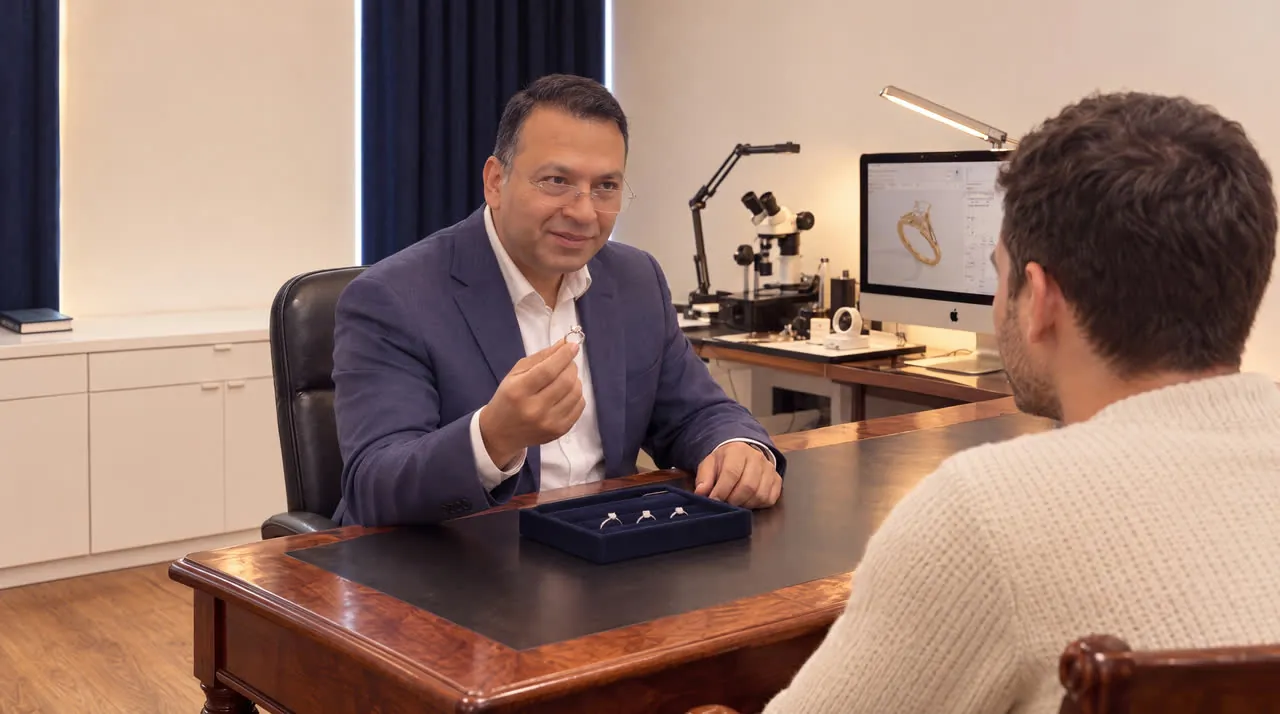
Ask a gemologist
Not sure which diamond to choose?
Raj Sood is a Graduate Gemologist (GIA) who works alongside our master jewellers. Bring the stones you are considering, or send the reports, and he will tell you honestly which one is better and why.
Keep learning
Related guides
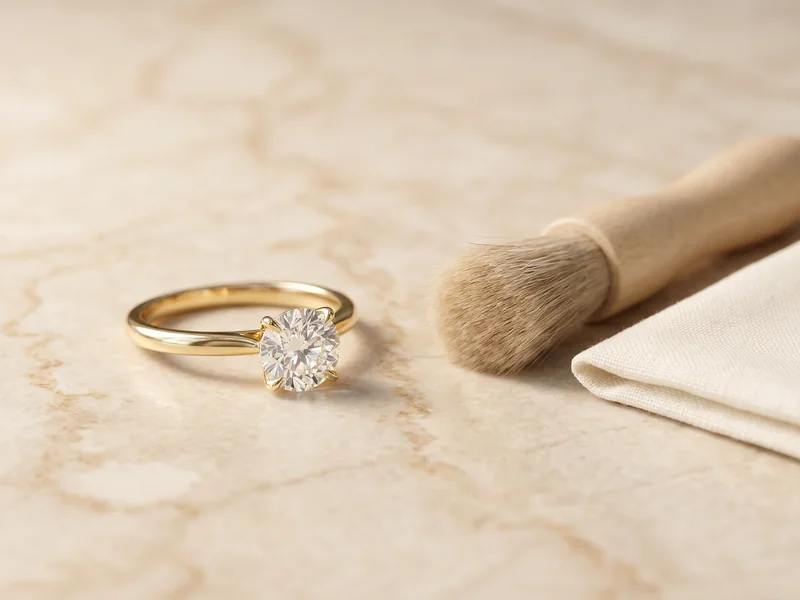 Care, Repairs & RemodellingRe-Shanking a RingCare, Repairs & RemodellingLoose Stones and Stone Tightening
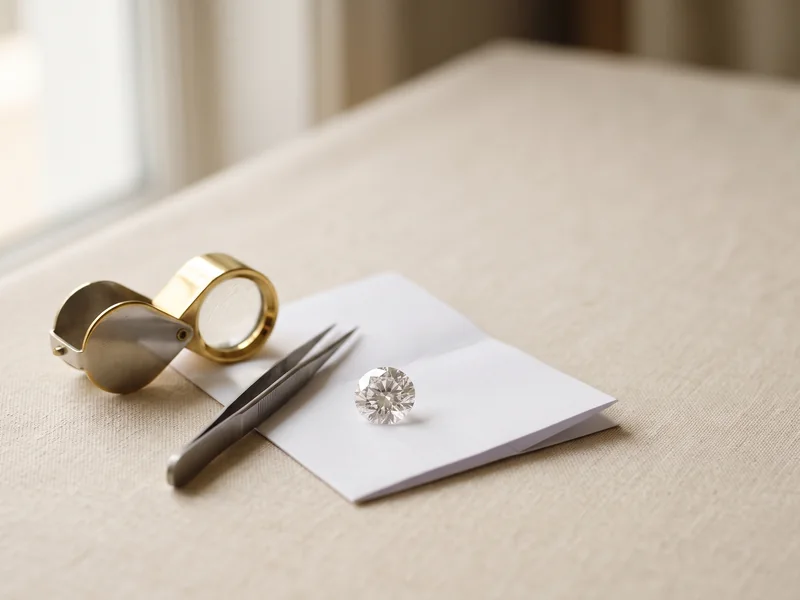 Certificates & ValuationsJewellery and Diamond ValuationCare, Repairs & RemodellingEngagement Ring Care GuideCare, Repairs & RemodellingJewellery Care and Maintenance
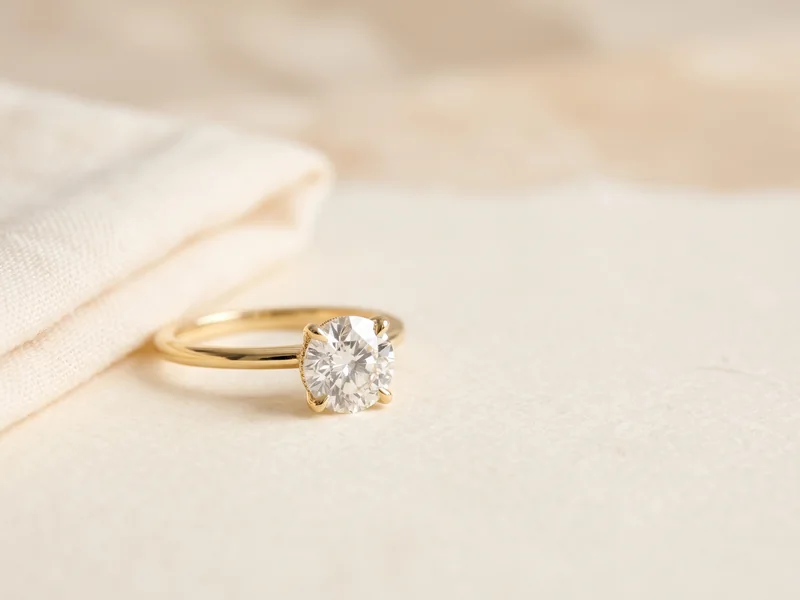 Care, Repairs & RemodellingRing Sizing Beads and Sizing BarsCare, Repairs & RemodellingHow to Clean a Diamond Ring at Home
 Care, Repairs & RemodellingWhen to Repair vs Replace a Band
Explore more
More guides on this topic
Education