
- Education
- Care, Repairs & Remodelling
- Watch Repair Melbourne
Watch repairs in Melbourne
Watch Repair Melbourne
Battery, band, clasp, scratches or a stone missing from the bezel? Every watch job starts with a consultation and a quote. The work is done by the horologist on our panel, and you deal with GemTrove from start to finish.
 Reviewed by Raj Sood, Graduate Gemologist (GIA), AJP (GIA)Founder and Graduate Gemologist (GIA) · reviewed 17 November 2026
Quick answer
GemTrove takes in watch repairs at our Melbourne CBD showroom, Unit 903/125 Swanston St, Melbourne VIC 3000. The work is done by the horologist on our panel, not in house, and every job starts with a consultation and a quote. Common jobs: batteries, bands, clasps, buckles, scratches, polishing, bezel stones and engraving. Allow up to 5 weeks; many jobs are sooner.
What watch repairs can GemTrove do?
Watches are worn every day, so they collect scratches, scuffs and knocks, and their straps, clasps and batteries wear out. GemTrove takes in watch repairs at our Melbourne CBD showroom, but the watch work itself is not done in house.
We have a horologist, a specialist watchmaker, on our panel. You bring the watch to us, we look at it with you, and we send it to the horologist, who repairs it for us. You deal with GemTrove from start to finish, and the watch comes back to you through us.
Every watch is different, so we do not list which parts can be repaired or replaced. Every watch job starts with a consultation and a quote. Nothing is done until you have the quote and agree to it. For rings, chains and other pieces, which our own jewellers repair, see our jewellery repairs service.
What are the most common watch jobs?
These are the jobs people bring in most. Each one starts with a consultation and a quote, and the work is done by the horologist on our panel.
- Batteries: a quartz watch that has stopped or is losing time usually needs a new battery.
- Bands: a worn leather, rubber, fabric or metal band replaced to fit your watch's lug width. See how to measure your wrist.
- Bracelet sizing and repair: links added or removed, or a broken bracelet repaired. Bring any spare links.
- Clasps and buckles: a clasp that will not stay shut, or a worn or broken buckle, fixed or replaced.
- Pins and spring bars: a pin that has fallen out replaced, and the others checked.
- Polishing a gold watch: scratches taken out and the shine brought back, where the metal allows.
- Scratches on the case or bracelet: refinished to the original mix of polished and brushed surfaces.
- Scratched or cracked glass: assessed, and polished or replaced depending on the watch.
- A diamond has fallen out of the bezel: matched and reset.
- Engraving: a case back engraved for a gift, a retirement or an anniversary. See ring and jewellery engraving.
- Gaining or losing time, or stopped for no clear reason: the movement looked at and serviced.
- Mist under the glass: moisture has got in. Bring it in promptly, because water damages a movement quickly.
Why do we inspect your watch before any work begins?
The right repair depends on the watch. A mark that polishes out of a solid steel case can go straight through a plated or coated one, and a crystal that can be buffed on one watch must be replaced on another. So we look at the whole watch first: the case, bracelet, clasp, crystal, bezel, crown and strap.
Then we explain your options, which ones are worth doing, and which are better left alone. Plated and coated watches need particular care; our guide to gold-plated, gold-filled and solid gold explains why a plated surface can't be polished like solid metal, and rhodium plating and replating shows how a plated finish wears.
Can scratches be removed from a watch?
Sometimes, yes. Scratches can sometimes be taken out of the glass or the bracelet, but it depends on the watch: what it is made of, how it is finished and how deep the marks go. We tell you what is realistic at the consultation. Here is what usually happens on each part of a watch.
- Case: light scratches and dull areas can often be improved by careful polishing, as long as the metal and finish allow.
- Bracelet: scratched links and "desk-diving" marks from resting your wrist on a desk often refinish well, especially on stainless steel.
- Clasp: scratches can usually be polished, but a loose or stiff closing action is a separate repair.
- Bezel: some marks can be improved; a damaged insert may need replacing.
- Crystal: an acrylic crystal can sometimes be polished; most glass and sapphire crystals are replaced instead.
- Plated or coated watches: polishing can remove the coating, so the work may be limited.
- Vintage watches: light restoration is often better, to keep the watch's character.
A dent is not a scratch. Polishing can soften how a dent looks, but it can't push metal back into place, and removing too much metal to hide a deep mark changes the case for good. Solid gold cases are softer than steel and need a lighter touch; see 9k vs 18k gold and our guide to gold jewellery.
Not sure what your piece needs?
Bring it in, or send us clear photos, and our gemologist will tell you what needs doing, what can wait and what we would leave alone.
What's the difference between polishing, brushing and refinishing?
The three words are often used as if they meant the same thing. They do not, and most watches need more than one of them, because a case usually mixes mirror-polished bevels with brushed or satin surfaces.
- Polishing: buffing the metal with very fine abrasive compounds on a soft wheel. It takes off a very thin layer, removes light scratches and leaves a mirror shine, which also shows new marks easily. See high-polish finishes.
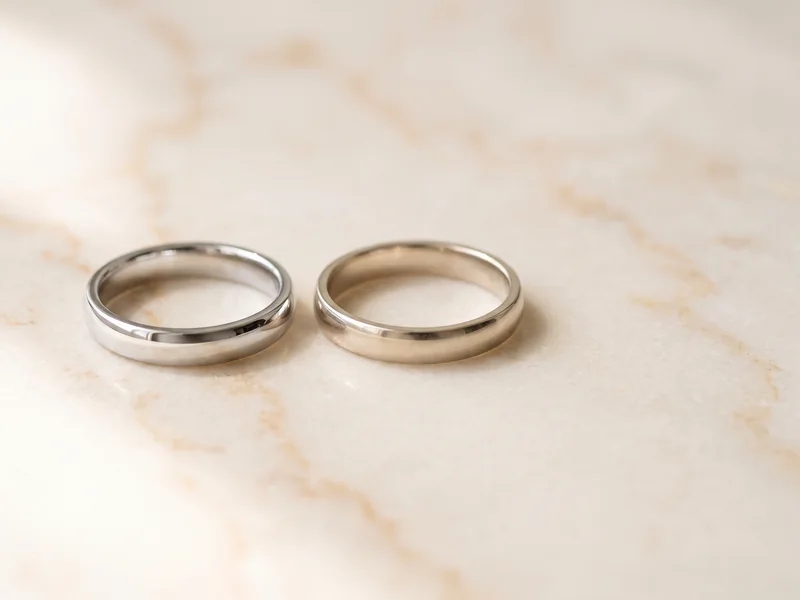
- Brushing: drawing a fine abrasive pad or wheel across the metal in one direction. It leaves even, parallel lines, the satin look that hides everyday marks, and it has to follow the maker's original direction. See brushed and satin finishes.
- Refinishing: the whole job. The case and bracelet are taken back to the way the maker finished them: the polished parts polished, the brushed parts brushed, and the sharp edges where the two meet kept crisp. Polishing and brushing are steps inside a refinish.
- Matte or blasted finishes: a flat, even surface that cannot be polished without changing its look. See sandblasted finishes.
How much does a watch repair cost in Melbourne?
We do not publish a set price for watch work, because the cost depends on the watch as much as on the job. Every job starts with a consultation; the horologist on our panel then quotes through us, and nothing is done until you agree. These are the things that move the price:
- The job. A battery or a strap is simple. Refinishing a case and bracelet is skilled, slower work.
- The watch. Parts for some brands are easy to get; others are supplied only by the maker.
- Quartz or mechanical. A mechanical movement that needs servicing takes more of the horologist's time.
- The case material. Steel, gold, plated and coated cases are finished in different ways. See plated, filled and solid gold.
- The finish. Restoring a mix of polished and brushed surfaces takes longer than one finish.
- Water resistance. Testing after the case has been opened is done by the horologist.
The quote covers the whole job, so there are no surprises later.
How long does a watch repair take?
Allow up to 5 weeks. Many jobs are finished much sooner, and some simple ones take a day or two. The time depends on the work itself, the metal, and whether a stone or a part has to be sourced.
We confirm the time for your watch with the quote, before any work begins. If you need it back for a date, tell us when you book and we will tell you honestly whether it can be done.
What do GemTrove customers say?
These are Google reviews from GemTrove customers, quoted word for word.
5.0 on Google
★★★★★
“We got the sizing dramatically wrong and Raj was patient… He had it fixed quickly and delivered an excellent ring.”
Richard L.
Google review · ring sizing corrected
★★★★★
“… His prompt communication and willingness to help made what could have been a stressful situation completely hassle-free. The craftsmanship, attention to detail, and level of care provided by Neeraj and the Gemtrove team exceeded my expectations. …”
Seno R.
Google review · engagement ring
★★★★★
“… Trusts isn't something that can be written in a few words, it is something to be earned. Buying something with not only high monetary value but of sentimental value depends on a lot of trusts. …”
Whiz
Google review · anniversary ring upgrade
★★★★★
“… His deep knowledge of diamonds and the do's and don'ts of ring design was invaluable. … The craftsmanship and attention to detail are outstanding, and the rings turned out even more beautiful than we imagined. …”
Tanveer D.
Google review · engagement and wedding rings
★★★★★
“Raj is very friendly and knowledgeable on all things diamonds. I went to him to make an engagement ring for me after seeing all his positive reviews. He helped me design the perfect ring. He listened to everything I was looking for and gave me great advice along the way.”
The Adsta
Google review · engagement ring
Read all GemTrove reviews on Google
Can a scratched watch crystal be fixed?
It depends on what the crystal is made of. Acrylic crystals, common on older and vintage watches, are soft enough that light scratches can sometimes be polished out. Mineral glass is harder but can chip. Sapphire crystals are laboratory-made sapphire and are very scratch resistant, because sapphire sits at 9 on the Mohs hardness scale, just below diamond. See our gemstone hardness guide to see how it compares.
A chipped or cracked crystal should be replaced, not polished, because a crack can let in moisture and dust. We look at the crystal with you and get a quote from the horologist on our panel.
When does a quartz watch need a new battery?
- It has stopped or is losing time.
- The second hand jumps in steps of several seconds. Many quartz watches do this to warn you the battery is running low.
- It has been in a drawer for years. Replace an old battery promptly, because a flat battery left in a watch can leak and damage the movement.
Opening the case to change a battery disturbs its seals. If you swim or shower with your watch, ask about water-resistance testing, which the horologist on our panel does when it is needed. Our guides to wearing jewellery in the shower, pool or at the beach and sunscreen, chlorine and your jewellery apply to watch bracelets and straps too.
Bracelet sizing, clasps and straps
A watch that slides around your wrist wears faster and is easier to knock. We can add or remove links where the bracelet allows. Keep any spare links somewhere safe, because you may need them later or when you sell the watch.
- Clasp repair: adjustment, polishing or replacement for a clasp that is loose, scratched, stiff or not closing properly.
- Strap replacement: leather, rubber or fabric straps in the right width and fitting for your watch.
- Skin reactions: if a bracelet irritates your skin, read metal allergies and nickel-free options; titanium is a common choice for sensitive skin.
- Metal stamps: the marks on a case back or clasp can tell you what it's made of. See Australian hallmarks and metal stamps.
Should you restore a vintage or inherited watch?
Gently, if at all. Age marks, worn edges and patina are part of a vintage watch's story, and heavy polishing can take away the crisp lines and original finish that collectors value. We usually recommend the lightest repair that makes the watch wearable and safe again.
If the watch is part of an estate, a valuation may matter more than a polish. See valuations for estates and family law, and replacement value vs resale value for why the two figures differ. Deciding whether to fix a worn piece or start again? Our guide to repair vs replace uses the same thinking.
How do you look after a watch between repairs?
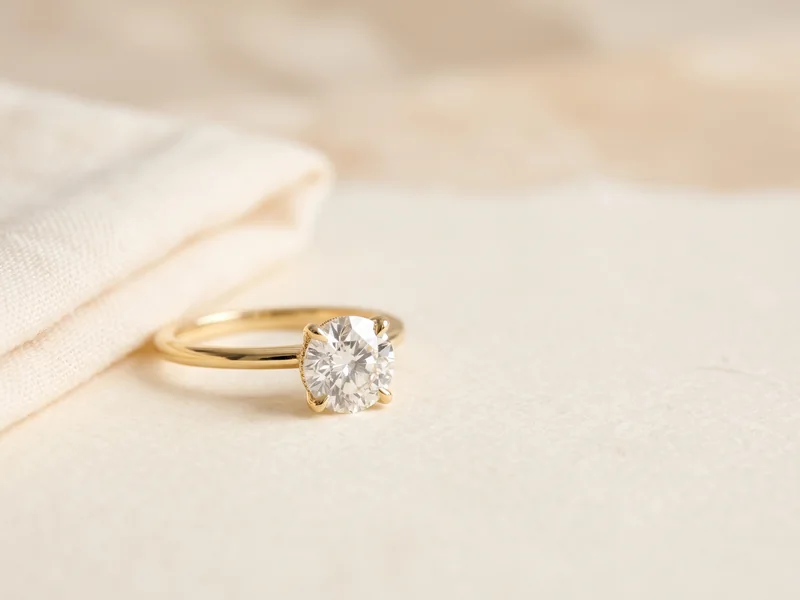
- Clean it gently. Wipe the case and bracelet with a soft, dry cloth. Never put a watch in an ultrasonic cleaner; see what can go in an ultrasonic cleaner and professional vs home cleaning.
- Store it on its own. Keep it away from rings and diamonds that can scratch it. See how to store jewellery.
- Travel carefully. Carry it with you rather than in checked luggage. See travelling with fine jewellery.
- Watch the stones. On a gem-set bezel or dial, have loose stones checked early. See loose stones and stone tightening.
- Follow a routine. Our jewellery care and maintenance guide covers everything you wear daily.
Should you value or insure your watch?
If your watch would be expensive to replace, yes. Insurers usually ask for a current valuation. Read jewellery valuations for insurance, how jewellery insurance works in Australia and how often to revalue jewellery, or see our jewellery and diamond valuation service.
What should you know, and when would we advise against it?
- Rush a movement service. A mechanical movement is serviced by the horologist on our panel, and that work cannot be hurried. We tell you before anything is done.
- Promise every original part. Some crystals, crowns and bracelet links are released only by the maker, and some are no longer made. Where that is so, we tell you what can be sourced or made to match.
- Polish a coated or plated case back to new. Polishing removes the coating. We explain what can be improved and what cannot.
- Promise water resistance. A watch is only as water resistant as its seals, and that has to be tested after the case is opened.
- Refinish a collectable watch heavily. On vintage pieces the original finish is part of the value, so we recommend the lightest work that does the job.
For the jewellery you wear with it, see jewellery repairs in Melbourne and cufflinks and men's jewellery.
Where can you get a watch repaired in Melbourne CBD?
At our showroom on Swanston Street. GemTrove has been in business since 2008, and our family has been in the jewellery trade since 1984. Watch work is done by the horologist on our panel, and every job starts with a consultation and a quote. Allow up to 5 weeks; many jobs are ready sooner, and some take a day or two.
- Showroom: Unit 903/125 Swanston St, Melbourne VIC 3000 (Level 9), by appointment.
- Hours: Monday to Friday 9:30 am to 5:30 pm, Saturday 11:30 am to 1:00 pm, Sunday closed.
- Phone: 0488 878 000.
- Book: book a visit and bring the watch, any spare links and its papers if you have them.
Free consultation
Talk to a gemologist
Compare stones in person or online with Raj Sood, Graduate Gemologist (GIA), AJP (GIA).
Book a consultationFAQ
Common questions
How much does a watch repair cost?
It depends on the watch and the work. Every job starts with a consultation; the horologist on our panel then quotes through us, and nothing is done until you agree.
How long does a watch repair take?
Allow up to 5 weeks. Many jobs are finished much sooner, and some simple ones take a day or two. We confirm the time with your quote, before any work begins.
Where can I get watch links removed in Melbourne?
At our Melbourne CBD showroom. We can add or remove links where the bracelet allows; bring any spare links you have.
Can scratches be removed from a watch?
Sometimes. Scratches can sometimes be taken out of the glass or the bracelet, but it depends on the watch. Deep gouges and dents can be softened but not always removed. We tell you what is realistic at the consultation.
Do you service automatic and mechanical watches?
Yes, through the horologist on our panel. You deal with GemTrove throughout, and every job starts with a consultation and a quote.
Will polishing affect my watch's value?
It can, especially on vintage and collectable watches, where the original finish and sharp case lines matter. We recommend the lightest work that does the job.
Is my watch still water resistant after a battery change?
Opening the case disturbs its seals. If you swim or shower with your watch, ask for a water-resistance test, which the horologist on our panel does.
Can you replace a watch band or a watch battery?
Yes. We replace batteries in quartz watches and fit new leather, rubber, fabric and metal bands, sized to your wrist.
Do you repair watches in house?
No. GemTrove has a horologist on its panel. We take the watch in, the horologist repairs it for us, and you deal with GemTrove throughout. Every job starts with a consultation and a quote.
Ask a gemologist
Not sure whether to repair, restore or remake?
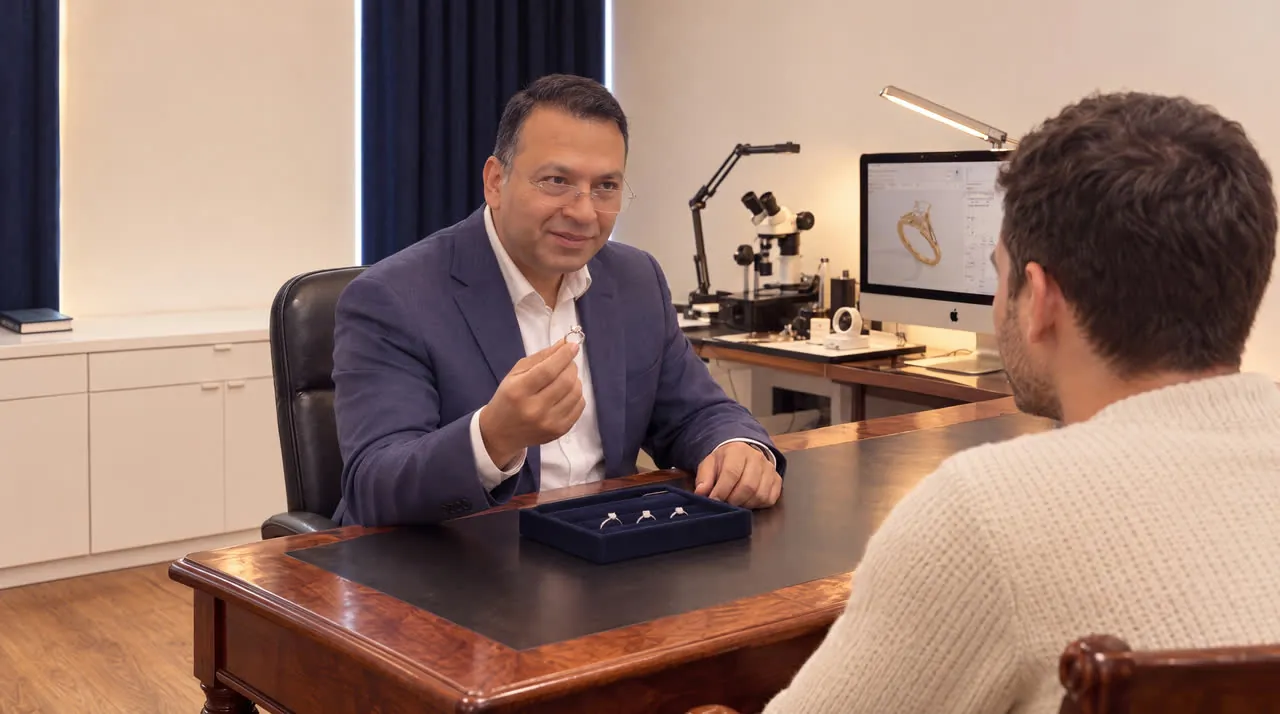
Raj Sood is a Graduate Gemologist (GIA) who works alongside our master jewellers. Bring the piece in and he will tell you honestly what it needs, what it does not, and what we would advise against.
Keep learning
Related guides
 Wedding Bands & EternityBrushed and Satin Ring Finishes
 Care, Repairs & RemodellingProfessional Jewellery Cleaning vs Home Cleaning
 Certificates & ValuationsInsurance Jewellery Valuation Explained
 Metals9K vs 18K Gold: Which Gold Is Better for Jewellery?
 MetalsAustralian Hallmarks and Metal Stamps
 GemstonesCan Every Gemstone Go in an Ultrasonic Cleaner?Care, Repairs & RemodellingCan You Wear Your Ring in the Shower, Pool or at the Beach?
Explore more
More guides on this topic
Education